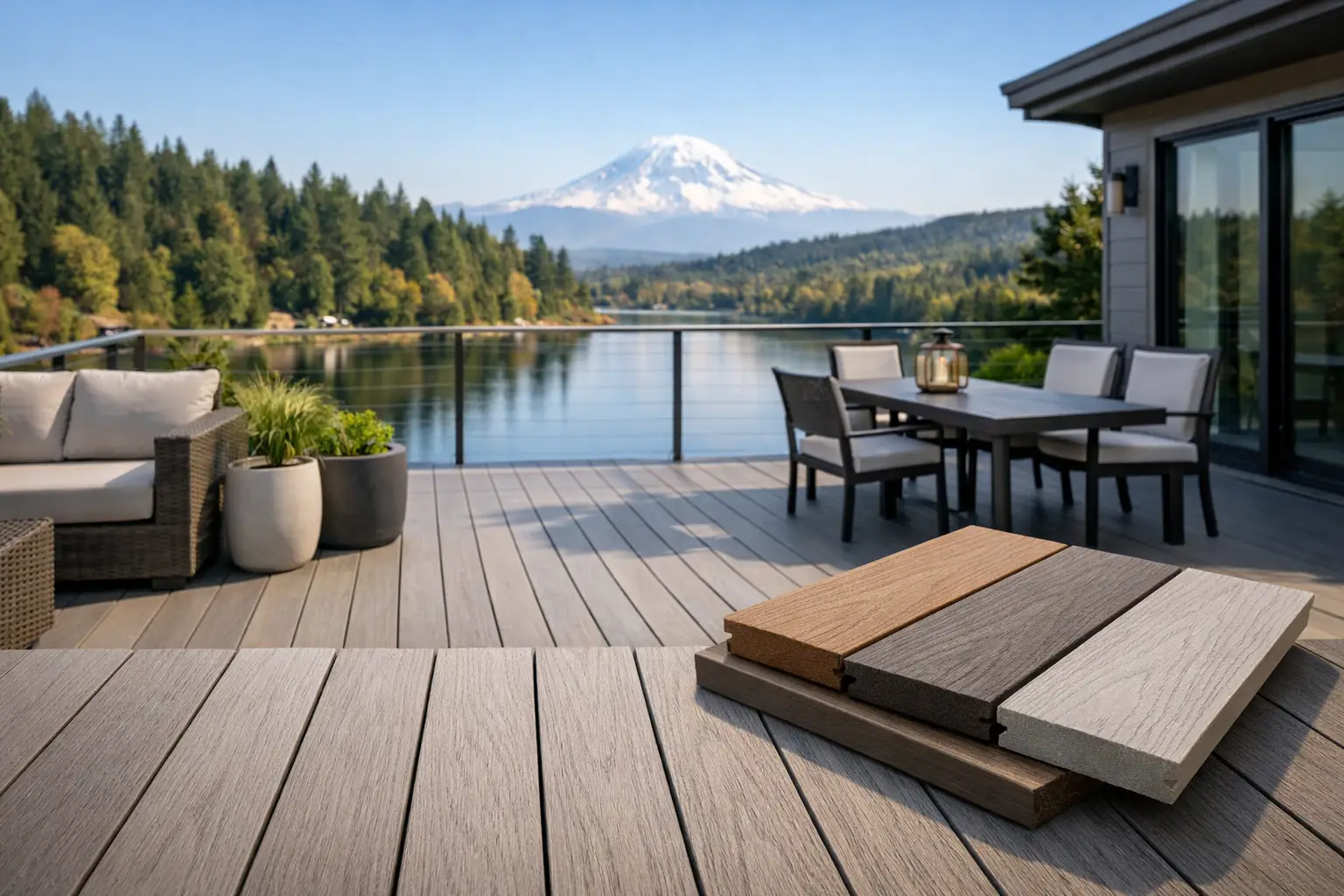
A deck in Kitsap or Mason County has a hard job. It stands through months of rain, damp shade, wind-driven debris, muddy shoes, and the occasional summer heat wave. This Azek deck board review looks at whether premium PVC decking is worth the investment for homeowners who want less maintenance without cutting corners on appearance or long-term performance.
Azek is a high-end composite-alternative deck board made primarily from capped polymer, often called PVC decking. It does not contain a wood core, which sets it apart from many composite products. That construction is a major reason it performs well in wet Pacific Northwest conditions, but it also comes with a higher upfront price and a few installation details that should not be overlooked.
What Makes Azek Deck Boards Different?
Azek decking, sold under the TimberTech AZEK line, is designed to give homeowners the look of a finished wood deck without the regular staining, sealing, splinter repair, and rot concerns that come with natural lumber. The boards have a polymer core and protective cap, rather than the blend of wood fibers and plastic used in many conventional composites.
For local homeowners, the biggest practical difference is moisture resistance. A wood-framed deck still needs proper flashing, drainage, and ventilation, but the Azek deck boards themselves do not absorb water the way wood does. That means they are not prone to the same swelling, splitting, cupping, or decay issues seen on neglected wood decking.
The surface is also made for everyday use. It handles patio furniture, pets, outdoor meals, and foot traffic well when it is installed and maintained correctly. Textured finishes and multi-tonal colors provide a more natural appearance than the early generations of plastic decking many homeowners remember.
Azek Deck Board Review: Where It Performs Well
Strong choice for wet and shaded properties
Rain is not unusual here. What causes trouble is persistent moisture that sits in shaded areas, under planters, near trees, or beside poorly drained landscaping. Azek is a particularly good fit for these conditions because the board itself will not rot.
That does not mean a deck becomes maintenance-free. Leaves, pollen, moss, and dirt can still collect on any surface. Regular cleaning remains necessary, especially beneath furniture and along the edge of the home where shade holds moisture longer. The difference is that you are cleaning to keep the deck looking good and reduce slip hazards, not trying to stop the boards from breaking down.
Low-maintenance ownership
Most homeowners considering Azek are tired of the cycle of pressure washing, sanding, staining, and sealing a wood deck every few years. Azek eliminates much of that work. A seasonal wash with soap, water, and a soft brush is usually enough for normal dirt and surface buildup.
For landlords and property managers, that reduced maintenance can make a real difference. A durable deck surface can help limit recurring repair calls, particularly on rental homes where furniture gets dragged, grills are moved, and routine upkeep may not happen on schedule. It is still wise to inspect the framing, railings, fasteners, stairs, and ledger connection regularly, but the deck boards demand far less attention than wood.
Comfortable underfoot and free of splinters
Bare feet, kids, and pets are part of the reason homeowners build decks in the first place. Azek boards do not splinter, and the surface stays more consistent over time than aging lumber. That is valuable around hot tubs, pools, outdoor dining spaces, and doorways where people commonly step outside without shoes.
The boards also resist many common stains better than wood. Spills should still be cleaned promptly, particularly grease from a grill or food with strong color, but the capped surface gives homeowners a better chance of keeping the deck looking clean.
A more finished appearance
Azek is available in several color families, including weathered wood looks, richer brown tones, and cooler gray options. The right choice depends on the house exterior, railing style, sun exposure, and how much heat the deck will receive. Lighter boards generally hide dust and can be easier on bare feet in direct sun. Darker colors can make a deck feel more formal, but they may show pollen and heat up more quickly.
A professional installation matters as much as the board selection. Straight picture-frame borders, clean stair details, concealed fasteners, and well-planned railing transitions are what make a premium deck look like a lasting part of the home rather than an add-on.
The Trade-Offs Homeowners Should Know
A fair Azek deck board review needs to address the drawbacks. The biggest one is cost. Azek is usually more expensive than pressure-treated lumber and often costs more than entry-level composite decking. Material prices vary by product line, color, deck layout, railing choice, and site conditions, but this is not a bargain deck material.
The question is whether the extra cost makes sense over the life of the deck. For a homeowner planning to stay put, or for a property where rain, shade, and tree coverage are hard on wood, paying more for a low-maintenance surface can be a sound decision. For a short-term project with a limited budget, a well-built pressure-treated deck may be the better fit.
Heat is another consideration. PVC decking can become hot in direct sun, especially in darker colors. This is not unique to Azek, and many surfaces get hot on clear summer days, but it should be discussed before selecting a color for a south- or west-facing deck. If the deck will be used heavily by children, pets, or anyone barefoot, a lighter shade, shade structure, or area rug designed for exterior use may help.
Azek boards also expand and contract differently from wood. Temperature changes can affect board length, which is why installers must follow the manufacturer’s spacing, fastening, and gapping requirements. The framing needs to be straight and properly supported. Cutting corners on the installation can create uneven gaps, movement, or a finish that does not match the quality of the material.
Finally, PVC boards can be damaged by improper cleaning methods or certain products. Avoid harsh solvents, abrasive pads, and high-pressure washing at close range. A deck should be cleaned according to the manufacturer’s current care guidance, not treated like a concrete driveway.
Is Azek Better Than Composite Decking?
Not automatically. It depends on the deck’s location, your budget, and what kind of maintenance you are trying to avoid. Capped composite decking can be an excellent choice for many local homes. It often offers a solid look, good durability, and a lower entry price than PVC.
Azek has an edge where moisture resistance and low weight matter most. Because it does not rely on a wood-based core, it is less vulnerable to moisture-related problems within the board. That can be especially appealing for decks near wooded areas, waterfront properties, covered spaces with limited drying, and homes where the deck sees long periods of damp weather.
Composite can make more sense when homeowners want a specific texture or price point, while Azek may be the better long-term choice when the goal is maximum resistance to water and minimal surface upkeep. Both products need quality framing and proper installation. Neither one can correct a deck that has inadequate footings, a failing ledger, poor drainage, or undersized structural members.
Installation Details That Protect Your Investment
The deck board is only one piece of the system. Before replacing boards or building a new deck, the existing structure should be evaluated for rot, flashing issues, loose connections, and code concerns. It is common to find that old wood decking has hidden problems below the surface, especially near the house and at stair connections.
A good installation plan accounts for drainage, joist spacing, stair layout, railing attachment, fascia, and transitions at doors. On elevated decks, access beneath the structure may also affect how the framing and waterproofing details should be handled. Homeowners should not assume a simple re-deck is always simple until the framing has been inspected.
Kitsap Maintenance installs Azek decking with the same practical focus used on every outdoor living project: build the structure correctly, follow product requirements, and leave the homeowner with a deck that is safe, clean-looking, and ready to use.
Who Should Choose Azek?
Azek is a strong option for homeowners who want to invest once and spend less time maintaining their deck afterward. It is especially well suited to properties with heavy rain, shade, nearby trees, waterfront exposure, or a history of wood deck rot. It also works well for busy households, rental properties, and owners who value a polished finish and long-term durability.
It may not be the right material for every project. If the budget is tight, the deck gets intense all-day sun, or the home will be sold soon, compare the full installed cost against wood and capped composite before deciding. The best deck is not simply the most expensive one. It is the one that fits the home, the site, and the way you plan to use it.
Before choosing a color or product line, have the deck location and framing reviewed in person. A clear plan for drainage, shade, board layout, and structural repairs will do more for the life of your new deck than any brochure ever could.
Leave a Reply