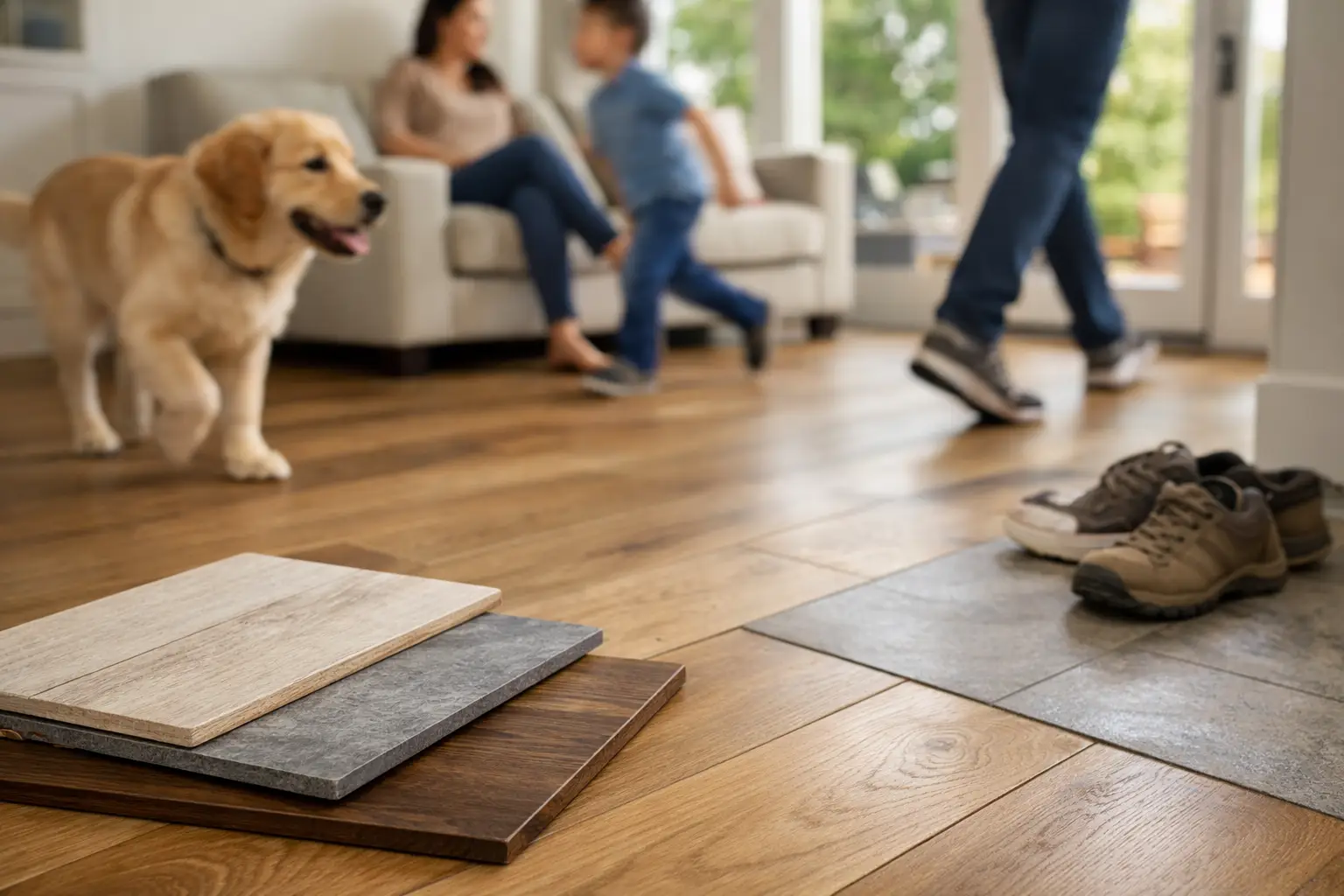
A muddy dog at the back door, kids dropping backpacks in the hallway, wet boots after a Kitsap County rainstorm – your floors take the hit. The best flooring for busy households is not always the most expensive option or the one that looks best in a showroom. It is the material that fits how your family, tenants, pets, and guests actually use the space.
For homeowners and property managers in Western Washington, moisture resistance deserves extra attention. So do scratch resistance, cleaning time, comfort underfoot, and the condition of the subfloor beneath the finished surface. A good flooring decision should hold up through daily life without turning every spill, scuff, or rainy afternoon into a repair project.
The Best Flooring for Busy Households Starts With Real Life
Before comparing samples, think through where the flooring will go and what happens there every day. An entryway that sees wet shoes needs a different material than a quiet upstairs bedroom. A rental between tenants may call for a practical, durable surface that is easy to replace or repair. A family kitchen needs flooring that can handle dropped dishes, pet water bowls, and constant traffic.
Ask a few straightforward questions: Is this room prone to water? Will pets be running across it? Do you want a floor that feels warm and quiet, or is maximum durability the priority? Are you planning to stay in the home for many years, or preparing a property for rental use or resale?
The right answer is often different from room to room. There is no requirement that every floor in a home be the same material. In fact, pairing durable waterproof flooring in high-traffic areas with warmer materials in bedrooms can be a practical, good-looking approach.
Luxury Vinyl Plank: A Strong All-Around Choice
Luxury vinyl plank, often called LVP, is one of the most practical choices for active homes. Quality products offer a realistic wood appearance while standing up well to scratches, spills, muddy paws, and routine cleaning. Many options are waterproof, making them a dependable choice for kitchens, hallways, living areas, laundry rooms, and finished basements.
LVP is also more forgiving underfoot than tile. That matters in homes where people spend a lot of time cooking, cleaning, or standing at a kitchen island. It is generally quieter than hard surfaces such as ceramic tile, and it does not need refinishing like solid hardwood.
Not all vinyl plank is built the same. Thickness, wear-layer quality, locking system, and proper installation all affect how long the floor lasts. A bargain product may show damage sooner, separate at the seams, or telegraph unevenness from the subfloor. Investing in a quality product and proper floor preparation usually pays off in a better finished result.
For many families, landlords, and property managers, LVP is close to the best balance of appearance, durability, and maintenance. It is not indestructible, though. Sharp furniture legs, very heavy appliances dragged across the floor, and damaged edges can still cause problems.
When LVP makes the most sense
LVP is a strong fit for households with dogs, children, frequent guests, or a busy kitchen and entry area. It is also a practical choice when you want the appearance of wood without the regular worry that comes with water and scratches.
Porcelain Tile: Best for Water and Heavy Wear
Porcelain tile is hard to beat in bathrooms, mudrooms, laundry rooms, and other areas where water is part of the daily routine. It resists moisture, scratches, and wear exceptionally well. With the right installation, it can last for decades.
Tile offers a wide range of styles, from wood-look planks to clean stone and concrete looks. It is especially useful near exterior doors, where rain, sand, and grit can get tracked inside. For a home near the water or a property with an active outdoor lifestyle, tile can protect the areas that take the most abuse.
The trade-off is comfort. Tile is hard and can feel cold in Washington winters, particularly over a concrete slab. It can also be unforgiving when dishes fall, and installation requires careful subfloor preparation. If the floor structure has movement or the surface is not properly prepared, cracked grout or tile can follow.
In the right room, tile is one of the toughest flooring choices available. For a whole house, some homeowners prefer to limit it to wet areas and use a warmer material elsewhere.
Engineered Hardwood: Real Wood With More Stability
Homeowners who want the character and warmth of genuine wood should consider engineered hardwood. Unlike solid hardwood, engineered boards are constructed in layers, which typically makes them more stable when humidity changes. That can be helpful in the Pacific Northwest, where seasonal moisture and indoor heating can affect natural materials.
Engineered hardwood brings a higher-end appearance to living rooms, dining rooms, offices, and bedrooms. It can be a smart choice in homes where style and long-term value matter, but it needs realistic expectations. Even quality engineered wood can scratch, dent, and react poorly to standing water.
This is not usually the first choice for a mudroom, a bathroom, or a high-spill kitchen. It works best in lower-moisture areas where you are prepared to use mats at entries, wipe up spills promptly, and protect the surface with felt pads under furniture.
The thickness of the wood veneer matters. Some engineered products can be refinished, while thinner products may have limited repair options. That is worth discussing before installation, particularly if you expect the floor to see years of active use.
Laminate Flooring: Durable, But Watch the Water
Modern laminate has come a long way in appearance and scratch resistance. It can be a budget-conscious option for bedrooms, hallways, and living spaces, especially when a wood look is the goal. Some newer products are advertised as water-resistant, giving homeowners more flexibility than older laminate floors offered.
Still, water resistance is not the same as waterproof. Moisture that works into seams or sits too long can cause swelling and edge damage. For that reason, laminate may not be the best fit for bathrooms, laundry rooms, or entries where wet boots are common.
A well-chosen laminate floor can perform well for a busy household, but the product and location need to match. If water is a regular concern, LVP or tile will usually provide more peace of mind.
Carpet Still Has a Place in Busy Homes
Carpet may not be the first material that comes to mind for durability, but it remains a sensible option for bedrooms, upstairs spaces, and family rooms where warmth and sound control matter most. It cushions falls, softens noise, and makes a room feel more comfortable during cool weather.
For active households, choose a low-pile, stain-resistant carpet rather than a thick, loose style that traps dirt and shows traffic patterns quickly. Consider carpet tiles in spaces where replacement flexibility is valuable. If one area gets damaged, a single tile can often be replaced instead of re-carpeting the entire room.
Carpet is less practical for pet accidents, frequent spills, or wet entryways. It also requires regular vacuuming and occasional professional cleaning to stay fresh. Used in the right place, though, it adds comfort that hard flooring cannot fully match.
Installation Matters as Much as the Material
Even the best flooring product can fail when installed over an uneven, damp, or damaged subfloor. Squeaks, soft spots, loose planks, cracked tile, and visible seams often point to preparation issues below the surface rather than a problem with the finished flooring itself.
Before new flooring goes in, inspect for moisture damage, rot, previous water intrusion, and floor leveling concerns. This step is especially important after a leak, flood, or long-term plumbing issue. Covering a damaged subfloor may hide the symptom, but it will not solve the problem.
Professional installation also helps ensure proper expansion gaps, transitions between rooms, trim details, and a clean fit around doors and cabinets. Those details affect both appearance and performance. Kitsap Maintenance can help homeowners and property managers assess existing conditions and complete flooring work with the practical preparation it deserves.
Choose a Floor You Can Live On, Not Worry About
The strongest choice is the one that supports your routine without demanding constant attention. For many busy homes, that means quality LVP in everyday living spaces, porcelain tile in high-moisture zones, and carpet or engineered hardwood where comfort and character matter most. Start with the room, the traffic, and the moisture exposure, then choose a floor built for the life happening above it.
Leave a Reply