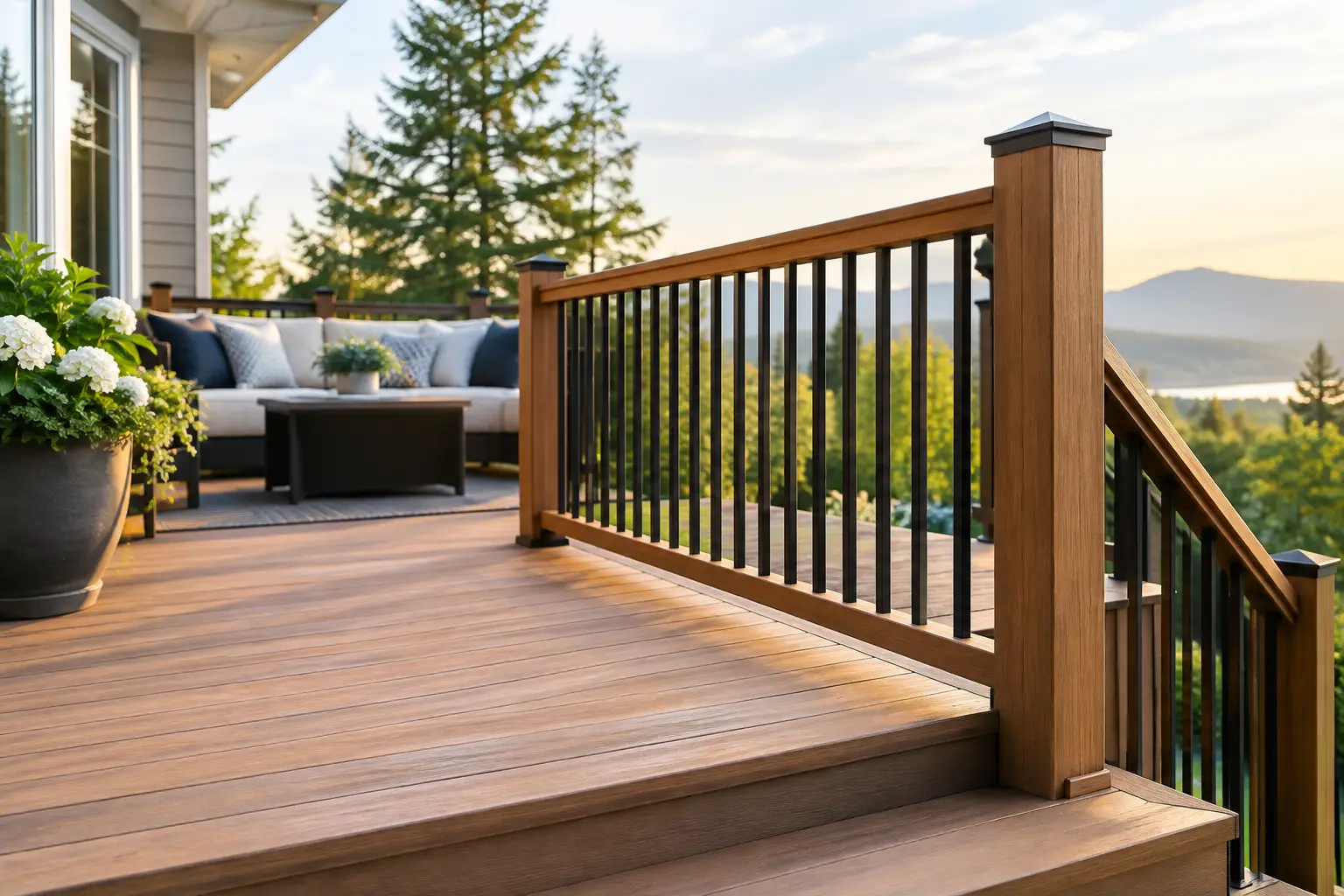
A deck railing has a bigger job than finishing the edge of your outdoor space. It needs to protect people, meet code, hold up through Kitsap County rain and wind, and look right with your home. Knowing how to choose deck railing starts with treating it as a safety system and a long-term part of your deck investment, not an afterthought.
The best choice depends on your deck height, how you use the space, the view you want to preserve, and how much maintenance you are willing to take on. A waterfront deck in Bainbridge Island may call for a different solution than a covered backyard deck in Silverdale or a rental property in Bremerton.
Start With Safety and Local Code Requirements
Safety comes first. Railings are generally required when a deck surface is more than 30 inches above grade, but exact requirements can vary by jurisdiction, deck design, and property type. Height, baluster spacing, stair rail requirements, post attachment, and load resistance all matter.
This is not an area for guesswork or a quick cosmetic upgrade. A railing can look solid while its posts are poorly fastened to the deck framing underneath. That becomes a serious hazard when someone leans against it, a child climbs near it, or a group gathers on the deck.
For most residential decks, homeowners should expect guardrails around the deck perimeter and a graspable handrail on stairs. The rules are especially important for elevated decks, properties with children or pets, and rental homes where owners have an added responsibility to provide a safe exterior space. A qualified deck contractor can verify the applicable local requirements before materials are ordered or construction begins.
Match the Railing to Your Deck and Home
Railing should look like it belongs with the house, but it should not compete with the deck itself. Consider your siding color, trim, roofing, window frames, and the material of your decking. A traditional cedar-style home may suit wood or black metal railing. A newer home with composite decking may look best with clean-lined composite, aluminum, or cable rail systems.
Proportion matters, too. Thick posts and wide rails can feel substantial on a large, elevated deck, but they may overwhelm a small platform outside a back door. Slim aluminum rails often make a compact deck feel more open. On the other hand, a deck with a broad panoramic view may benefit from cable or glass infill that keeps sightlines clear.
Do not select from a small showroom sample alone. Ask to see how the color and texture will work next to your decking in natural daylight. In Western Washington, gray skies, evergreen surroundings, and damp seasons can change how colors read compared with a bright indoor display.
Compare the Main Deck Railing Materials
There is no single best railing material for every property. The right fit comes down to appearance, upkeep, durability, and budget.
Wood railing
Wood has a familiar, traditional look and can be built to suit many deck designs. It can also be painted or stained to coordinate with the home. For homeowners who want a warm, natural finish, wood remains a strong option.
The trade-off is maintenance. Our wet climate can lead to peeling paint, checking, rot, mildew, and loose fasteners when wood railings are not regularly protected. Wood components need inspection and refinishing over time, particularly on exposed decks. Good construction details and quality materials make a difference, but wood is a hands-on choice.
Composite railing
Composite railing pairs naturally with composite deck boards, including Trex and Azek systems. It offers a finished appearance without the frequent staining or painting associated with wood. Many homeowners appreciate the consistency of color and the way coordinated components create a polished outdoor living space.
Composite systems typically cost more upfront than basic wood. They can also have larger profiles, which may block more of the view than aluminum or cable. Still, for homeowners planning to stay in the home and wanting less routine upkeep, the long-term value can be compelling.
Aluminum railing
Aluminum is durable, low-maintenance, and well suited to the Northwest climate. It is commonly available in black, bronze, white, and other powder-coated finishes. Its slim lines work well on contemporary homes and can preserve more of the view than bulkier railing options.
Aluminum is not the same as a decorative metal railing from a big-box shelf. Quality, post spacing, fastening methods, and approved system components matter. A properly installed aluminum system offers clean looks and dependable performance without asking you to repaint it every few years.
Cable railing
Cable railing is popular for decks overlooking trees, water, or open yards because it creates minimal visual interruption. It has a modern, high-end appearance and works especially well when the deck is designed around the view.
It also requires careful planning. Cable tension, post strength, spacing, and code compliance all need to be handled correctly. Over time, cables may need adjustment. Families with young children should also think realistically about whether the horizontal lines create a tempting climbing surface.
Glass railing
Glass panels provide the clearest possible view while still creating a physical barrier. They can be an excellent fit for waterfront homes, view properties, and covered decks where wind protection matters.
The trade-offs are price and cleaning. Rain spots, pollen, salt air near the water, and fingerprints show on glass. The panels must also be installed with the right hardware and structural support. Glass can be beautiful, but it is a premium choice that deserves a professional installation plan.
Think About Maintenance Before You Buy
Every railing needs occasional inspection, but the level of routine care varies sharply. Be honest about how you use the property. If this is a weekend cabin, a busy family home, or a rental with frequent turnover, a lower-maintenance material may save money and frustration later.
For wood, plan on periodic cleaning, sealing, staining, or painting. For composite and aluminum, regular washing and checks for loose hardware may be enough. Cable systems need tension checks, and glass needs cleaning if the view is the reason you chose it.
Maintenance is also about what you cannot see from the deck surface. Fasteners, post connections, flashing, and framing conditions should be inspected as the deck ages. In our area, moisture can find small gaps and turn them into costly rot repairs if problems are ignored.
Plan for Your View, Privacy, and Daily Use
A railing should support the way you actually live outside. If you host summer cookouts, a sturdy top rail can provide a place to set a drink, though it should never replace a proper serving surface. If you have a dog, consider whether baluster spacing and the lower rail will keep your pet safely contained. If the deck faces a close neighbor, privacy panels or strategic screening may make the space far more comfortable.
Views deserve equal consideration. Before choosing a railing, stand or sit where you normally would on the deck. A standard railing height can cut directly across a water view when seated, while a more open infill may preserve it. A good design balances the view with safety instead of sacrificing one for the other.
Stairways need special attention. They are one of the most heavily used parts of a deck and often the first place railings become loose. Make sure the handrail feels comfortable to grip and that the railing design transitions cleanly from the deck to the stairs.
Set a Realistic Budget for the Whole System
When comparing estimates, look beyond the cost per linear foot. The full railing price can include posts, caps, infill, stair components, hardware, reinforcement, demolition of an old railing, repairs to damaged framing, and permits when required.
A lower initial price is not always the lower-cost choice. A basic wood railing may fit a tight budget today, but repeated refinishing and eventual replacement should be part of the decision. Premium glass or cable may cost more upfront, yet can add meaningful enjoyment and appeal to a view property.
If the existing deck is older, ask whether the framing and rim joists are suitable for the new railing system. Replacing rails without addressing soft wood, weak connections, or water damage can leave a good-looking project with a poor foundation.
Work With a Contractor Who Builds the Details Right
The most attractive railing material cannot make up for weak installation. Posts must be anchored correctly, stair connections need to be solid, and all components should be compatible with the chosen system. This is especially true for elevated decks and composite deck projects, where manufacturer installation requirements may affect performance and warranty coverage.
Kitsap Maintenance helps homeowners, landlords, and property managers make these decisions in person, with practical recommendations based on the deck, the property, and the way the space will be used. Whether the project is a new composite deck, a railing replacement, or repairs to an aging structure, the goal is straightforward: build it safely, make it look right, and make sure it lasts.
Before making a final selection, ask for a clear scope of work that addresses materials, structural conditions, code considerations, and maintenance expectations. The right railing should give you confidence every time family, guests, or tenants step outside.
Leave a Reply