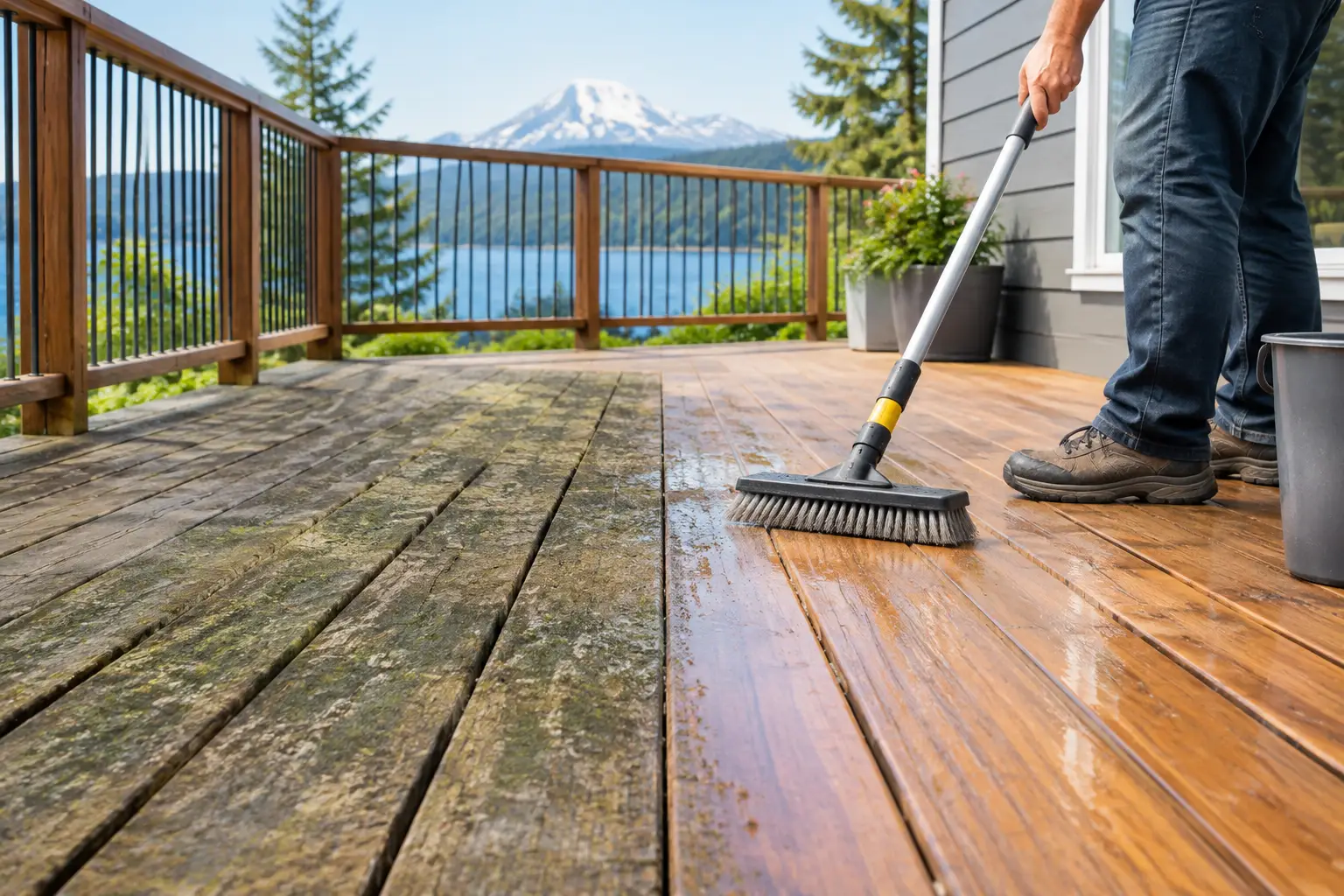
A deck in Kitsap or Mason County can stay damp long after the rain stops. Needles, leaves, shade, and our long wet season create the right conditions for mildew to settle in. Knowing how to prevent deck mildew is less about one powerful cleaner and more about keeping the deck dry, clear, and in good repair throughout the year.
Mildew usually starts as a gray, green, or black film on the walking surface. It can make boards slick, stain the finish, and hold moisture against wood. On composite decking, mildew does not eat the boards the way it can damage untreated wood, but it can still grow on pollen, dirt, and organic debris sitting on the surface. Either way, a clean, well-drained deck is safer and lasts longer.
Why Decks Get Mildew in Western Washington
Mildew needs moisture, shade, and a food source. A deck beneath fir trees or surrounded by mature landscaping often has all three. Wet leaves collect in corners. Pollen sticks to boards. A north-facing deck may receive little direct sunlight, especially from fall through spring.
Poor drainage makes the problem worse. When water pools between boards, around posts, or against the house, it gives mildew more time to grow. The underside matters too. If the framing stays damp because air cannot move beneath the deck, the risk of rot rises along with surface mildew.
Wood decks are especially vulnerable when a stain or sealer has worn thin. Composite decks require less maintenance, but they are not maintenance-free. Even premium composite boards need periodic washing to remove the material mildew feeds on.
How to Prevent Deck Mildew Before It Starts
The most dependable approach is regular light maintenance. Waiting until the deck turns black or slippery usually means more scrubbing, a higher chance of finish damage, and a longer cleaning job.
Keep organic debris off the deck
Sweep the deck often during the wet season, especially after windstorms and heavy leaf drop. Focus on the spaces between deck boards, at stair corners, against railings, and behind furniture or planters. These areas trap damp material and tend to become the first mildew spots.
Do not let wet leaves sit under outdoor rugs, furniture covers, or planters. If you use a rug, choose one designed for outdoor drainage and lift it occasionally so the deck can dry. Planters should sit on feet or risers rather than directly on the boards. This small change prevents dark, damp circles and helps protect the finish below.
Make sure water has somewhere to go
A properly built deck needs small, consistent gaps between boards so rainwater can drain through. Those gaps can fill with debris over time. Clear them carefully with a narrow tool or a gentle stream of water, avoiding anything that gouges wood or damages composite board edges.
Check where the deck meets the home, as well as the area around support posts. Water should move away from the structure, not collect against siding, ledger boards, or concrete footings. Downspouts should discharge away from the deck whenever possible. If a gutter spills directly onto the deck, mildew will keep returning no matter how often the surface is cleaned.
Ground below the deck should also drain properly. Standing water beneath the framing creates a damp environment that can shorten the life of joists, beams, and posts. In some yards, improving grading, extending a downspout, or adding a drainage solution can make a bigger difference than changing cleaning products.
Improve airflow and sunlight where practical
You do not need to remove every tree around your outdoor space. Trees provide privacy and shade, and that can be one of the best parts of a Northwest home. Still, trimming back branches that keep the deck covered in needles or prevent it from drying can reduce mildew pressure.
Keep shrubs and vines from pressing against railings or growing beneath the deck. Air needs room to move around the framing and across the surface. If a deck is enclosed with skirting, make sure it has adequate ventilation. A dark, sealed-in under-deck area can hold moisture for weeks.
Wash the deck on a schedule
For many local homes, a thorough cleaning once in spring and another in fall is a good baseline. Decks under heavy tree cover, near the water, or in deep shade may need a light cleaning more often. Property managers should consider putting deck cleaning on a seasonal maintenance calendar rather than waiting for tenants to report a slippery surface.
Start with a broom or blower to remove loose debris. Then use a deck-safe cleaner matched to the material. Wood and composite products do not always call for the same solution, so read the deck manufacturer’s care guidance before applying a cleaner. A soft-bristle brush and garden hose are often enough for routine cleaning.
Pressure washing can be useful in skilled hands, but too much pressure can scar softwood, strip protective finish, force water into vulnerable areas, or leave visible marks on composite boards. If you use a pressure washer, use a low-pressure setting, maintain a consistent distance, and test an inconspicuous area first. For older or weathered decks, professional cleaning is often the safer option.
Protect Wood With the Right Finish
A quality water-repellent stain or sealer helps wood shed moisture instead of absorbing it. It will not eliminate mildew on its own, but it gives the deck a much better chance of drying between rains.
The right timing matters. Applying stain to damp wood can trap moisture and lead to peeling or uneven color. Clean the deck first, let it dry fully, then apply a product suited to the species and condition of the wood. Transparent finishes show more natural grain but may need more frequent reapplication. Solid-color stains can offer stronger UV protection and a more uniform appearance, though they can hide developing wood problems.
Watch for signs that the finish is no longer doing its job. If water soaks in rather than beads up, boards look dry and faded, or stain is peeling in high-traffic areas, it is time to plan maintenance. Addressing it early is far less expensive than replacing boards affected by prolonged moisture.
Do Not Clean Away the Warning Signs
Mildew can be a surface issue, but it can also point to a deck condition that needs repair. Soft boards, loose railings, spongy stair treads, cracked posts, rusting fasteners, or visible rot deserve attention beyond cleaning. A fresh coat of stain will not correct structural damage.
Pay close attention to the ledger board, which is the connection between the deck and the house. Water intrusion at this area can affect both the deck and the home. Flashing problems, missing hardware, and failed caulking should be inspected and repaired promptly.
Composite decks have their own warning signs. Look for loose boards, damaged fasteners, clogged drainage gaps, and areas where dirt repeatedly collects. The boards may be durable, but the framing underneath is often wood and still needs protection from trapped moisture.
A Simple Seasonal Routine That Works
A consistent routine keeps deck care manageable. In spring, clear debris, wash the surface, inspect railings and stairs, and check for drainage problems after winter rains. During summer, move furniture and planters periodically, sweep shaded areas, and monitor the condition of any wood finish.
In fall, remove leaves before they mat down, clear gutters and downspouts near the deck, and make sure water is not flowing toward the house or under the framing. After major storms, take a quick look for fallen branches, standing water, or loose components. These small checks prevent a minor moisture issue from becoming a repair project.
For homeowners who would rather spend their weekends using the deck than maintaining it, Kitsap Maintenance can help assess drainage, repair damaged decking, improve airflow concerns, and keep outdoor living spaces in working order. The goal is straightforward: a deck that stays safer underfoot and stands up better to the next Washington wet season.
A little attention after rain, leaf drop, and changing seasons will do more for your deck than any one-time deep cleaning. Keep it clear, let it drain, and address moisture problems while they are still small.
Leave a Reply