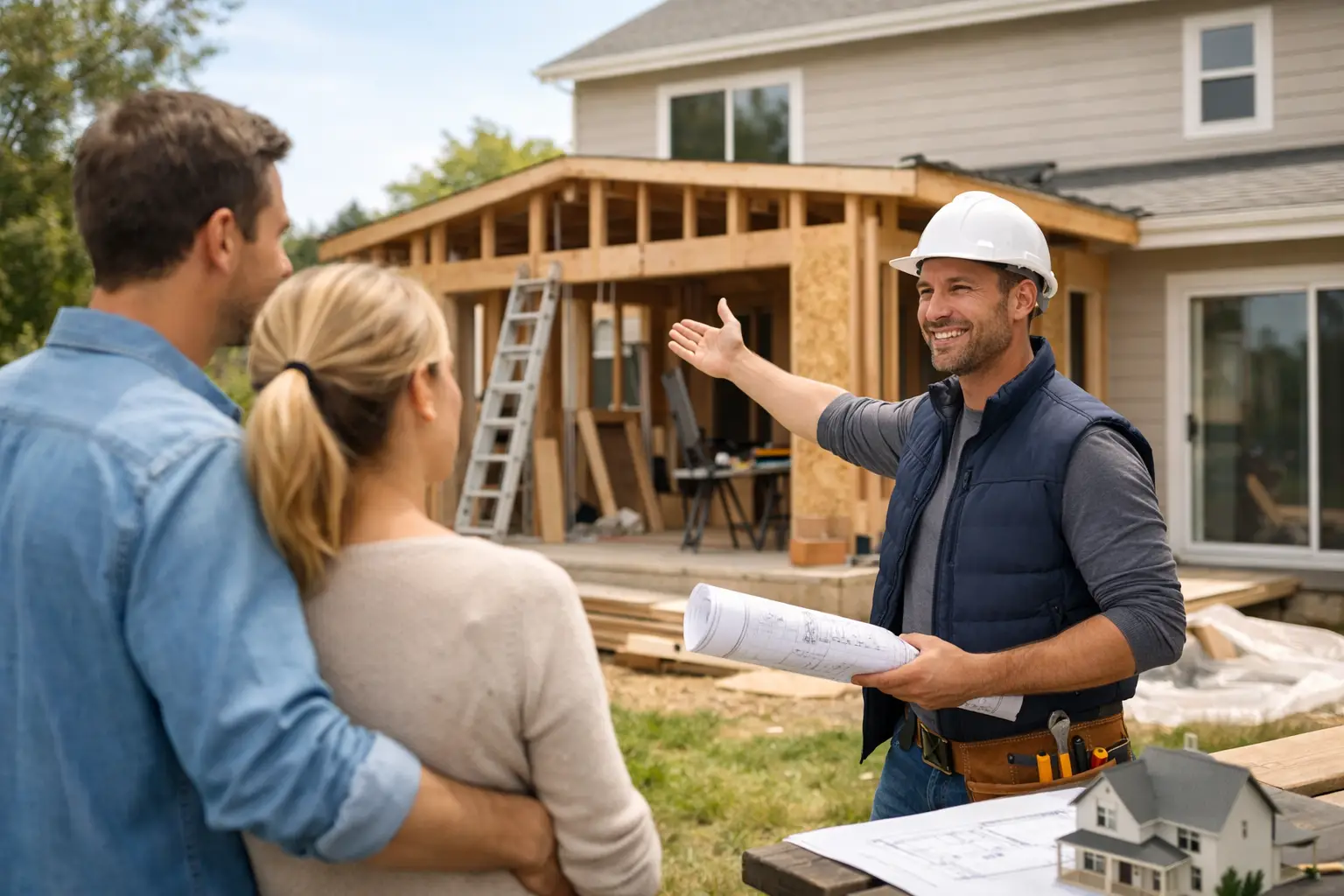
A room addition can solve a real problem fast. Maybe your family has outgrown the layout, you need a dedicated office, or you want more usable space without leaving the neighborhood you love. The hard part is not deciding you need more room. It is choosing a home addition contractor who can build it right, communicate clearly, and protect your investment from the first estimate to the final walkthrough.
In Kitsap and Mason County, that choice matters even more than many homeowners realize. Additions are not simple cosmetic upgrades. They affect structure, roofing, siding, electrical, plumbing, insulation, windows, permits, and how the new space ties into the rest of the house. When one piece is handled poorly, the whole project can suffer.
What a home addition contractor should really handle
A qualified home addition contractor is not just someone who can frame walls. They should be able to manage the full scope of work, or coordinate it properly, so the new space feels like part of the original home instead of an obvious afterthought.
That includes early planning, site evaluation, demolition when needed, framing, exterior envelope work, interior finishes, and coordination with licensed trade partners for electrical and plumbing. It also means understanding how moisture, drainage, and existing structural conditions can affect the project. In Western Washington, that is not a side issue. It is part of doing the job responsibly.
Some additions are straightforward, like extending a living room or adding a bedroom over a garage. Others get more complex fast, especially when the existing home has settling, hidden rot, outdated wiring, or older materials that need to be addressed before new work begins. A dependable contractor will talk plainly about those possibilities instead of pretending every project is simple.
Signs you are hiring the right home addition contractor
The best contractor is not always the one with the lowest price. On additions, the cheapest bid often leaves out real costs that show up later as change orders, delays, or shortcuts.
You want a contractor who is licensed, insured, experienced with structural work, and willing to walk the property in person before putting real numbers together. A serious company asks questions about how you use the home now, what is not working, and what success looks like when the job is done. That tells you they are thinking beyond square footage.
Look for clear communication from the start. If it takes days to get a basic response before the contract is signed, that usually does not improve once work begins. A good contractor explains the scope, the sequence of work, the expected timeline, and where unknowns may exist.
It also helps to choose a company with broad experience in remodeling, repairs, and exterior work. Additions often expose issues outside the original scope. If the contractor can handle siding transitions, door and window installation, drywall repair, flooring, painting, and related finish work, the process is usually smoother.
Questions to ask before you sign anything
A good estimate meeting should feel like a conversation, not a sales pitch. Ask who will oversee the project day to day, how permits are handled, and what parts of the work are done in-house versus subcontracted. There is nothing wrong with subcontracted electrical or plumbing coordination, but it should be transparent.
Ask how the contractor deals with surprises inside walls or under floors. Every older home carries some risk. The right answer is not a promise that nothing will come up. The right answer is a clear process for documenting issues, pricing changes fairly, and getting approval before extra work starts.
You should also ask about scheduling. Not just when the project can start, but how the schedule is managed once it begins. Homeowners get frustrated when jobs sit half-finished because crews are bouncing between too many projects. A dependable contractor sets realistic expectations and keeps the work moving.
Warranty matters too. If a company stands behind its workmanship, it should say so in writing. That is one of the clearest signs that they expect the work to last.
Why local experience matters on additions
A contractor who knows Kitsap County, Mason County, and nearby communities brings more than a zip code. Local experience helps with permit expectations, common home styles, weather demands, and the kinds of repairs that show up during renovation work.
Homes near the water may have different exposure issues than homes tucked inland. Older houses in Bremerton or Poulsbo can come with aging materials and framing quirks. Properties in Belfair, Allyn, or Gig Harbor may raise different site access or drainage concerns. These details affect labor, materials, and timeline.
A local company also has more to lose by doing poor work. Reputation travels fast in communities like Silverdale, Bainbridge Island, and throughout the peninsula. That accountability matters.
Common mistakes homeowners make
One of the biggest mistakes is hiring based on price alone. If one bid comes in far below the others, there is usually a reason. Sometimes the scope is thin. Sometimes allowances are unrealistic. Sometimes the contractor simply has not thought through what it takes to tie new construction into an existing home.
Another mistake is focusing only on the new space and not the transition points. The quality of the tie-in is what makes an addition feel natural. Rooflines, siding matches, flooring transitions, trim work, insulation, and window placement all matter. A contractor with strong craftsmanship will care about those details from the start.
Homeowners also underestimate how disruptive an addition can be. Depending on the project, there may be noise, dust, utility interruptions, and temporary loss of access to part of the home. A good contractor does not hide that. They help you prepare for it.
What a solid addition process looks like
A well-run project usually starts with an in-person consultation. That is where the contractor learns the goal, evaluates the existing structure, and identifies likely challenges. From there, scope and budget become more grounded in reality.
Next comes planning and pricing. Some projects need more design work up front, especially if structural changes are involved. This is where honest contractors separate themselves from the pack. They do not rush homeowners into construction before the details are ready.
Once the scope is approved, permits and scheduling move forward. Then the project starts with demolition or site prep, followed by framing, exterior shell work, rough-in trades, insulation, drywall, finishes, and final trim. It sounds straightforward on paper, but each phase depends on the one before it being done right.
That is why project management matters as much as carpentry skill. A contractor who communicates well, coordinates trades responsibly, and keeps the site organized saves homeowners time, money, and stress.
When one company can make the job easier
Many additions lead to other improvements. Homeowners may decide to replace flooring in the connecting area, update paint, install new windows or doors, repair siding, or address damage uncovered during construction. Working with a contractor that can handle both the major build and the supporting repair work can simplify the entire process.
That is one reason local property owners choose companies with a full-service approach. If the same team can address structural concerns, finish details, exterior repairs, and related upgrades without passing you between multiple vendors, there are fewer delays and fewer communication gaps. For homeowners in our area, that kind of practical coordination often matters just as much as the addition itself.
The right fit is about trust, not just tools
A home addition is a major investment. You are not just buying materials and labor. You are trusting a company to work on the structure you live in, protect your property, and follow through when issues get complicated.
That means the right contractor should be responsive, honest about trade-offs, and confident without overpromising. Some projects are ideal for a simple bump-out. Others may make more financial sense as a remodel or reconfiguration of existing space. A good contractor will tell you when an addition is the right move and when it is not.
At Kitsap Maintenance, we have seen firsthand that homeowners value straight answers, quality workmanship, and crews that show up ready to work. That is what keeps projects moving and keeps trust intact.
If you are planning to expand your home, slow down enough to choose the contractor carefully. The extra time you spend asking good questions on the front end can save you months of frustration later and leave you with a space that looks right, works hard, and feels like it was always meant to be there.
Leave a Reply