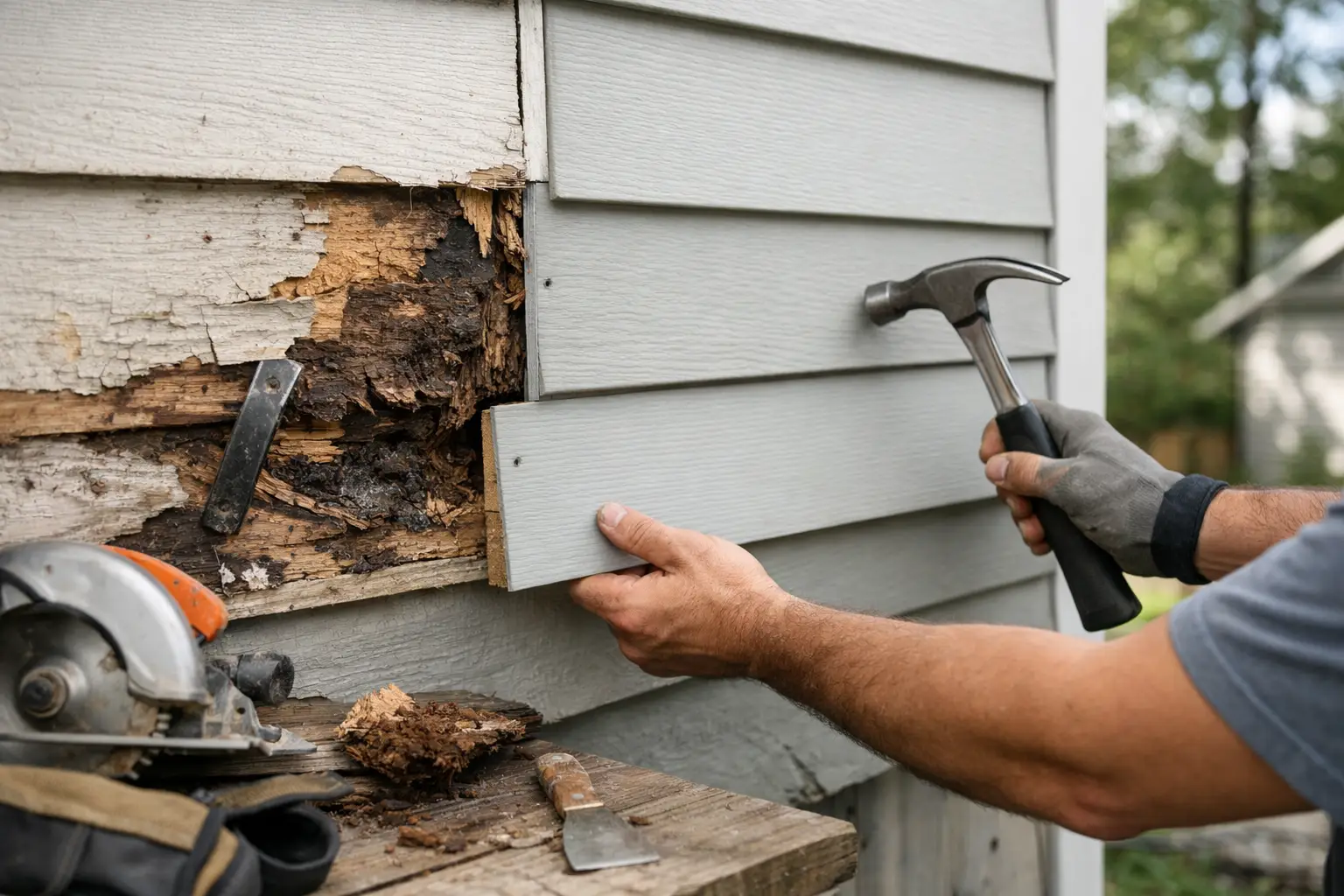
A soft spot under a window or a bubbled section of siding usually means the problem started long before you noticed it. Siding rot repair is rarely just about swapping out one bad board. In Western Washington, moisture finds its way into small gaps, sits there, and keeps working until trim, sheathing, and framing are at risk.
That is why the first question is not, “How much siding needs to be replaced?” It is, “Where is the water getting in?” If that part is missed, even a clean-looking repair can fail sooner than it should.
What causes siding rot in the first place?
Most rot issues come from repeated moisture exposure, not one big event. Around Kitsap and Mason County homes, the usual trouble spots are window and door trim, roof-to-wall intersections, bottom edges near grade, deck ledger areas, and any place old caulking has failed.
Paint failure can speed things up, but paint is not usually the real cause. The bigger issues are poor flashing, open joints, clogged gutters, splash-back from the ground, or siding installed too close to roofing or soil. Once water gets behind the surface and cannot dry out properly, wood begins to break down.
Rot also tends to spread farther than homeowners expect. What looks like a small damaged corner can turn into a larger repair after the siding is opened up. That is not upselling. It is the reality of hidden moisture damage.
Signs you may need siding rot repair
Some warning signs are obvious. Others are easy to miss until the damage has grown.
Soft wood, crumbling trim, peeling paint in one isolated area, swollen boards, mildew stains, and caulk lines that keep splitting open are all worth attention. Inside the home, you may also notice staining near windows or a musty smell in the wall cavity.
If a screwdriver presses into trim or siding more easily than it should, that is a strong sign decay has already started. The sooner it is addressed, the more likely the repair can stay limited to the affected area.
Siding rot repair vs full replacement
This is where honest evaluation matters. Not every problem calls for full siding replacement, and not every damaged section should be patched.
If the rot is localized, the surrounding materials are sound, and the water source can be corrected, a targeted repair is often the smart move. That can include removing damaged boards or trim, replacing affected sheathing if needed, installing proper flashing, sealing transitions correctly, and repainting to match.
If the siding is older, failing in multiple elevations, or showing repeated moisture damage in several places, replacement starts making more sense. The same goes for cases where the underlying weather barrier was installed poorly or the wall assembly has broader water intrusion.
There is a cost difference, of course. A repair is less expensive upfront, but only if it actually solves the problem. When widespread deterioration is present, repeated patch jobs can cost more over time than dealing with the larger issue once.
What a proper siding rot repair should include
A real repair is more than cosmetic carpentry. Anyone can fill, caulk, and paint over a problem. That is not the same as fixing it.
A proper repair starts by removing all compromised material. That may include siding, trim, sheathing, and occasionally structural framing if the damage has advanced. After that, the moisture source needs to be corrected. Depending on the location, that could mean new flashing, improved clearance from the roof or ground, replacing failed sealant, or adjusting drainage.
Then the wall can be rebuilt with the right materials and details. In many cases, modern trim products or rot-resistant materials can improve long-term performance, but product choice depends on the house, budget, and existing siding profile. Matching the repair so it blends with the rest of the home matters too, especially on visible front elevations.
Why moisture source matters more than the patch
This is the part homeowners are often not told clearly enough. Rot is a symptom. Water entry is the problem.
For example, replacing rotten trim around a window will not hold up if the top flashing is missing or the window was never integrated correctly with the weather barrier. Replacing lower siding boards will not last if sprinklers are soaking the wall every day or the siding ends are buried in soil. A clean finish means very little if the underlying conditions stay the same.
That is why good contractors spend time diagnosing before they cut. The repair may take a little longer upfront, but it protects the home better and reduces the chance of repeat damage.
Common areas where rot hides
Some parts of a home take more abuse than others. Window trim is one of the biggest. Water sits on horizontal trim surfaces, works into end grain, and slowly moves behind the paint line. Door surrounds have similar problems, especially if thresholds or drip caps were installed incorrectly.
Deck connections are another major risk area. If water gets trapped where a ledger meets siding, the damage can affect much more than exterior trim. Roof lines that terminate into walls can also create concentrated water exposure if kick-out flashing is missing.
Bottom courses of siding deserve a close look too. If they are too close to the ground, mulch, concrete, or roofing, they stay damp and break down faster. In this region, small installation errors add up quickly because the climate gives moisture plenty of chances to linger.
Can you repair rot without replacing the whole section?
Sometimes, yes. Minor isolated rot in trim or a single board can occasionally be repaired with selective replacement. In a few limited situations, wood consolidants or fillers may be used, but those are best reserved for very small, stable areas where the source of moisture has already been fixed.
For most exterior rot, replacement is the more dependable option. Fillers can have a place, but they should not be used to disguise widespread deterioration. If the wood has lost strength or the decay runs deeper than the surface, cutting it out is the better call.
That is especially true on exterior walls exposed to repeated wet weather. A short-term cosmetic repair may look good for a season, but it usually does not deliver the long-term value homeowners want.
What to expect during a siding rot repair project
The scope depends on what is found after the area is opened. A straightforward repair may be completed quickly. More involved damage, especially around windows, doors, or structural connections, takes more time because the wall assembly needs to be rebuilt correctly.
Homeowners should expect some investigation, not just immediate pricing from a photo. Until damaged materials are removed, there can be unknowns behind the siding. A trustworthy contractor explains that clearly, documents what is found, and talks through options before moving ahead.
That kind of communication matters just as much as the repair itself. People want to know what failed, how it is being corrected, and whether the fix is meant to be a local repair or part of a larger long-term plan.
Choosing the right contractor for siding rot repair
This is not the job for the cheapest bid and a tube of caulk. You want someone who understands siding, trim, flashing, moisture control, and how exterior systems work together.
Look for a contractor who is willing to inspect carefully, explain the cause, and be direct about whether repair or replacement is the better investment. If every answer sounds too easy, that is usually a red flag. Rot repair often has gray areas, and honest professionals will tell you when the answer depends on what is uncovered.
For homeowners and property managers in this area, it also helps to work with a company used to the demands of Western Washington weather. Local experience matters because recurring moisture problems tend to follow familiar patterns here.
Kitsap Maintenance handles siding and rot repair with that bigger picture in mind – not just making the damaged area look better, but addressing what caused it and protecting the structure underneath.
The cost of waiting
Rot rarely improves on its own. What starts as a repair to trim and siding can become sheathing replacement, framing work, interior drywall repair, or even mold cleanup if moisture keeps moving inward.
Waiting also makes matching older siding and paint finishes harder. The earlier the issue is caught, the more options you usually have and the more contained the repair can stay.
If you have a soft spot, staining, peeling paint in one stubborn area, or trim that just does not look right anymore, getting it looked at now is usually the smartest move. A small repair done for the right reason is a lot better than a bigger one done too late.
Leave a Reply