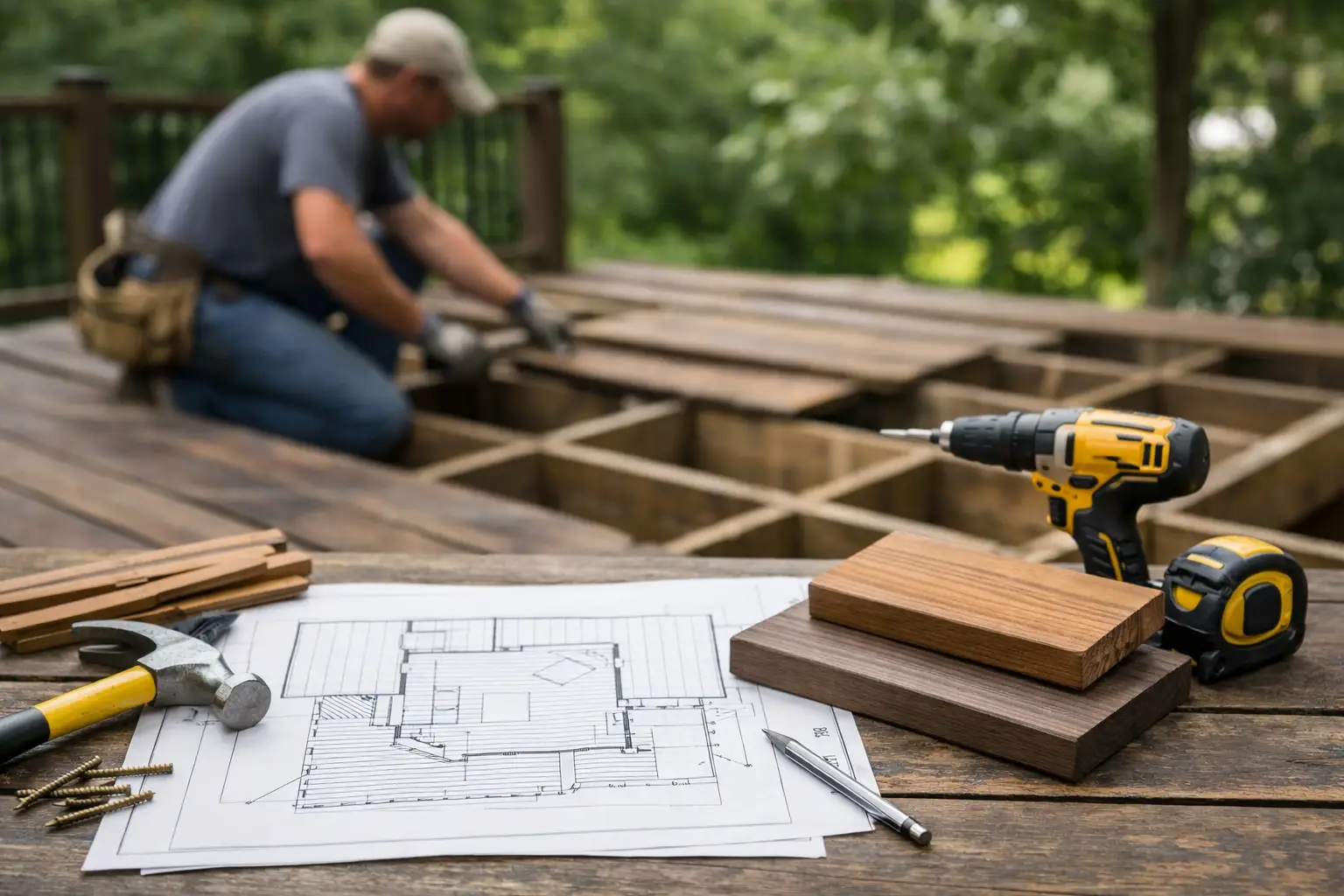
A deck usually tells you when it is done. Boards start to cup. Railings loosen up. Stairs feel less solid than they used to. In Western Washington, where moisture is part of daily life, small issues can turn into framing damage faster than most homeowners expect. If you are wondering how to plan deck replacement, the smartest move is to treat it like a structural project, not just a surface upgrade.
A good plan helps you avoid two expensive mistakes: replacing too little and paying twice, or overbuilding without a clear purpose. Whether you are in Bremerton, Silverdale, Poulsbo, Belfair, or elsewhere in Kitsap and Mason County, the right replacement plan starts with how you use the space, what condition the current deck is in, and how long you want the new build to last.
How to plan deck replacement without missing the big issues
The first question is not what color boards you want. It is whether the existing deck has reached the point where repair no longer makes financial sense. Homeowners often call for a few new deck boards and end up finding rot in joists, ledger issues, failing footings, or railing systems that no longer meet current safety standards.
That matters because a deck replacement is often more than a cosmetic project. If the framing is compromised, replacing only the visible boards may leave the structure underneath weak and unsafe. A qualified contractor should look at the entire assembly, including footings, posts, beams, joists, hardware, stairs, and attachment points to the house.
This is where an in-person consultation is worth it. Photos can show worn decking, but they do not always reveal movement, moisture damage, or connection failures. A proper site visit gives you a realistic idea of whether you need a partial rebuild, a full replacement, or a design change that solves long-term problems.
Start with the purpose of the new deck
Before choosing materials, get clear on what the deck needs to do for your household or property. A deck used for quick summer grilling has different needs than one built for large family gatherings, rental durability, or year-round outdoor living.
Think about traffic, furniture, stairs, lighting, privacy, and whether the deck should connect better to the yard, hot tub, or patio. If you have aging family members or tenants moving in and out, stair layout and rail design matter more than people realize. If the deck gets strong afternoon sun, surface temperature may influence your material choice. If you are close to trees or heavy moisture, ease of maintenance becomes a bigger factor.
A clear use case helps shape the layout and budget. It also keeps the project grounded. Too many deck replacements drift into added costs because the design was never pinned down at the start.
Budget for the full job, not just the boards
One of the biggest planning mistakes is pricing deck replacement as if it only involves new decking. In reality, your budget may need to cover demolition, disposal, framing, permits, stairs, railings, fascia, hardware, and possible repairs where the old deck meets the house.
If the existing structure was built years ago, code updates may also affect the final scope. Railing height, spacing, stair geometry, fastening methods, and structural connectors are common areas where older decks fall short of current requirements. Once you replace the deck, those items usually need to be brought up to standard.
Material choice also changes the long-term math. Pressure-treated lumber generally has a lower upfront cost, but it usually demands more maintenance over time. Composite decking and PVC products cost more at the start, yet many owners prefer them for durability, lower upkeep, and a cleaner finished look. That does not mean one option is always better. It depends on budget, exposure, design goals, and how long you plan to keep the property.
If financing is part of the plan, it is better to discuss that early rather than after the design is finalized. A realistic budget creates a project you can actually move forward with.
Choose materials based on local conditions
Planning deck replacement in the Pacific Northwest means respecting moisture. Rain, shade, moss, and seasonal temperature swings can be tough on outdoor structures. Materials need to perform well in that environment, not just look good on day one.
Wood remains a solid option for some homeowners, especially if they want a classic appearance and are prepared for regular sealing, cleaning, and upkeep. But if low maintenance is high on the list, composite or PVC decking often makes more sense. These materials can hold up well against moisture exposure and usually reduce the yearly maintenance burden.
The framing side matters too. Even premium decking will not perform well on a poorly built structure. Proper spacing, flashing, ventilation, drainage planning, and corrosion-resistant hardware all play a role in how long the new deck lasts. This is one reason many property owners choose experienced installers rather than treating the project as a simple carpentry job.
For homeowners comparing brands and systems, consistency matters. It helps to work with a contractor who knows how the products are intended to be installed and what details protect the warranty and structure over time.
Do not overlook permits, code, and structural design
Many deck replacements require permits, especially if the project involves structural changes, new footings, altered size, or updated stairs and railings. Even when a deck is being rebuilt in a similar footprint, local requirements can still apply.
That may not sound exciting, but it is one of the most important parts of planning. Permit and code compliance protect your safety, your resale value, and your liability. For landlords and property managers, that is even more critical. A deck is not the place to cut corners.
A reputable contractor should help you understand what is required in your jurisdiction and what parts of the old deck may trigger upgrades. If your property has drainage issues, difficult access, sloped terrain, or signs of previous settling, those factors should be addressed before construction starts. Good planning upfront usually costs less than trying to correct structural problems mid-project.
How to plan deck replacement around timeline and disruption
Deck replacement is outdoor construction, which means schedule can be affected by weather, product lead times, permit processing, and site conditions uncovered during demolition. The best way to avoid frustration is to build some flexibility into your timeline.
If the deck is your main rear entry or a common-use space for tenants, make sure access is part of the discussion. You may need temporary route changes, staging adjustments, or a phased schedule depending on the property layout.
Spring and summer are busy seasons for deck work, so waiting until the deck is actively failing can limit your options. Planning ahead gives you more control over scheduling and product selection. It also gives the contractor time to inspect thoroughly instead of rushing to patch something that really needs to be rebuilt.
Work with a contractor who plans, not just sells
A deck replacement should come with clear answers. What is staying, what is being removed, what is hidden damage versus assumed damage, what materials are proposed, what warranty applies, and what the finished project includes. If those details are vague, the project can get expensive fast.
Look for a contractor who is licensed, insured, experienced with structural outdoor work, and able to explain trade-offs in plain language. You want someone who can tell you when repair is still reasonable and when replacement is the smarter investment. You also want a team that understands local homes, weather conditions, and inspection expectations in this area.
For many homeowners, trust comes down to responsiveness and clarity. A dependable contractor should be willing to walk the site, answer questions directly, and give you a realistic proposal instead of a quick number with missing details. That is especially important if you are comparing wood against composite, keeping the same footprint versus redesigning, or trying to balance budget with long-term value.
Kitsap Maintenance works with homeowners and property owners who want deck projects handled the right way the first time, with practical guidance and quality workmanship that fits the property.
Plan for the next 15 to 25 years, not just this summer
The best deck replacement plans are built around ownership, not impulse. A lower upfront price can be the right choice in some cases, especially for shorter-term property plans. In other cases, paying more now for better materials, stronger details, and reduced maintenance saves money and hassle over the life of the deck.
That is the real answer to how to plan deck replacement. Start with safety, then function, then budget, then materials. Put the structure ahead of appearance, and work with a contractor who treats the deck like part of your home, not an add-on.
If your current deck is showing its age, now is a good time to get clear on what is happening underneath the surface. A solid plan gives you better choices, fewer surprises, and a finished space you can actually count on when the weather clears.
Leave a Reply