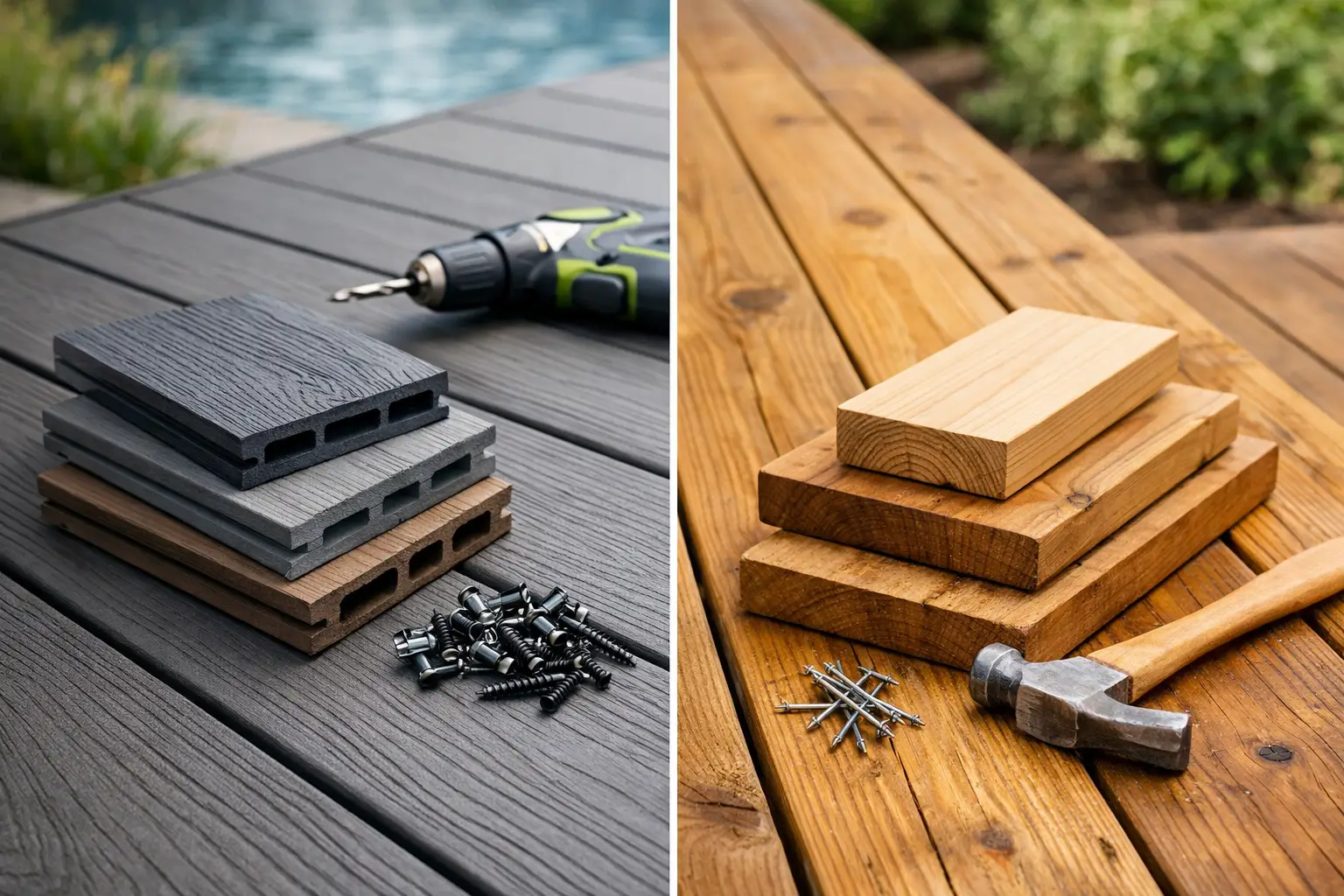
A deck on the Kitsap Peninsula has a tougher job than a deck in a dry climate. It deals with rain, damp air, moss, shade, and long stretches of wet weather. That is why composite decking versus wood is not just a style question around here. It is a real-world decision about maintenance, long-term cost, appearance, and how much work you want your deck to demand year after year.
For some homeowners, wood still feels like the right fit. It is familiar, natural, and often less expensive at the start. For others, composite makes more sense because it cuts down on upkeep and holds up better in a wet environment. The right answer depends on your budget, your expectations, and how you plan to use the space.
Composite decking versus wood in Washington weather
In Western Washington, moisture changes everything. A deck is not just standing up to foot traffic and patio furniture. It is also dealing with repeated soaking, drying, and the slow wear that comes from organic material staying damp too long.
Wood decks can absolutely perform well, but they need consistent care. Without regular cleaning, staining, and sealing, wood is more likely to absorb moisture, fade, crack, splinter, or develop rot. In shaded yards, algae and mildew can also become a bigger issue.
Composite decking is built to reduce those problems. It does not absorb water the way traditional wood does, and it will not splinter like aging lumber. That does not mean it is maintenance-free, because it still needs cleaning and basic care, but it usually requires far less hands-on work over time.
If your property sees a lot of shade, tree cover, or year-round moisture, composite often has the edge on practicality alone.
Upfront cost versus long-term value
This is usually where the decision gets real. Wood is often less expensive to install upfront, especially if you are comparing pressure-treated lumber to premium composite brands. If your main goal is getting a deck built at the lowest initial cost, wood may look attractive.
But the first price is not the whole story. Wood needs ongoing maintenance, and that cost adds up. Cleaning products, stain, sealers, repairs, replaced boards, and labor all become part of the deck’s lifetime cost. If maintenance gets delayed, the repair bill can grow fast.
Composite typically costs more at the beginning, but many homeowners recover that difference over time through lower maintenance and longer service life. When you are planning to stay in your home for years, the math often shifts in composite’s favor.
That said, it depends on the size of the deck, the product line you choose, and how disciplined you are about wood maintenance. A well-cared-for wood deck can serve you well. A neglected one can turn expensive in a hurry.
Appearance and curb appeal
Wood has one advantage that still matters to many homeowners – it is real wood. Some people simply prefer the warmth, grain variation, and classic character of natural lumber. If you love that traditional look and do not mind the upkeep, wood can still be a strong choice.
Composite has come a long way, though. Older products sometimes looked flat or artificial, but today’s boards offer more color depth, better texture, and cleaner finishing options. For many homeowners, especially those building a modern outdoor living space, composite looks polished and consistent in a way wood sometimes cannot.
Consistency is part of the appeal. With composite, you are less likely to see random board variation, knot issues, or the visual aging that comes when stain wears unevenly. If you want a deck that keeps a more uniform appearance with less work, composite is hard to ignore.
Maintenance is where the gap gets wide
What wood demands
A wood deck needs routine attention to stay healthy. That means cleaning it regularly, watching for moisture damage, checking for raised fasteners or splinters, and resealing or restaining it on schedule. In our area, that maintenance is not optional if you want the deck to last.
Even when wood is structurally sound, it can start to look tired faster than homeowners expect. Surface wear, discoloration, soft spots, and weathering show up gradually. Many people do not notice the decline until the deck already needs more than a simple touch-up.
What composite still needs
Composite is lower maintenance, not no maintenance. You still want to wash off dirt, pollen, and debris. Leaves should not be left sitting for long periods, and surface mold can still develop in damp conditions if the deck is ignored. But there is no staining, no sealing, and usually far less concern about splinters, insect damage, or board rot.
For busy homeowners, landlords, and property managers, that difference matters. A lower-maintenance deck means fewer recurring chores and fewer surprises.
Lifespan and structural concerns
Decking boards are only part of the picture. Whether you choose composite or wood, the framing underneath matters just as much. A deck can have beautiful surface boards and still fail early if the structure is poorly built or moisture-damaged.
Wood decking generally has a shorter service life than quality composite, especially if maintenance slips. Composite boards tend to last longer on the surface, hold their color better, and resist many of the common wear issues that age wood decks.
But not all composites are equal, and not all wood decks are built the same. Product quality, installation quality, drainage, ventilation, and flashing details all affect how well a deck performs. This is one reason professional installation matters. A good material can still underperform if the build is careless.
For homeowners investing serious money in an outdoor living space, it makes sense to look beyond the deck boards and think about the whole system.
Safety and comfort underfoot
When families compare composite decking versus wood, safety comes up often. Older wood decks are more likely to develop splinters, loose boards, popped nails, and slick patches from algae or worn finishes. That is not ideal for kids, pets, or anyone moving around the deck in wet weather.
Composite helps reduce some of those issues. It will not splinter, and many products offer good slip resistance. Some boards can get warmer in direct sun than wood, though in our region that is usually less of a problem than it is in hotter states. Color choice matters here, with darker boards tending to hold more heat.
If comfort, barefoot use, and lower slip risk are priorities, composite often checks more boxes.
Which material fits your home best?
Wood may be the better choice if
Wood can make sense if you want a lower upfront investment, you prefer the natural look of real lumber, and you are willing to stay on top of maintenance. It can also be a practical option for smaller decks, short-term ownership plans, or projects where budget is the deciding factor.
Composite may be the better choice if
Composite is often the better fit if you want long-term value, lower maintenance, and better performance in wet Pacific Northwest conditions. It is especially appealing for larger decks, higher-end outdoor spaces, and homeowners who would rather enjoy the deck than refinish it every few seasons.
For many local properties, composite ends up being the more dependable choice simply because it handles the climate better and asks less from the owner over time.
The decision is not just material – it is lifestyle
A lot of deck decisions come down to how you want to spend your time. Some homeowners do not mind annual upkeep. They enjoy maintaining wood and like the character it develops. Others want a cleaner, more predictable surface that stays attractive with less effort.
Neither approach is wrong. The mistake is choosing based only on initial price or only on appearance. The better move is to be honest about your budget, your maintenance habits, and how long you plan to keep the home.
At Kitsap Maintenance, we see this firsthand with homeowners across Kitsap and Mason Counties. The best deck choice is the one that fits the property, the climate, and the owner’s expectations from day one.
If you are weighing your options, think past the showroom sample. Picture the deck after five rainy winters, a few busy summers, and real everyday use. That is usually where the right answer becomes clear.
Leave a Reply