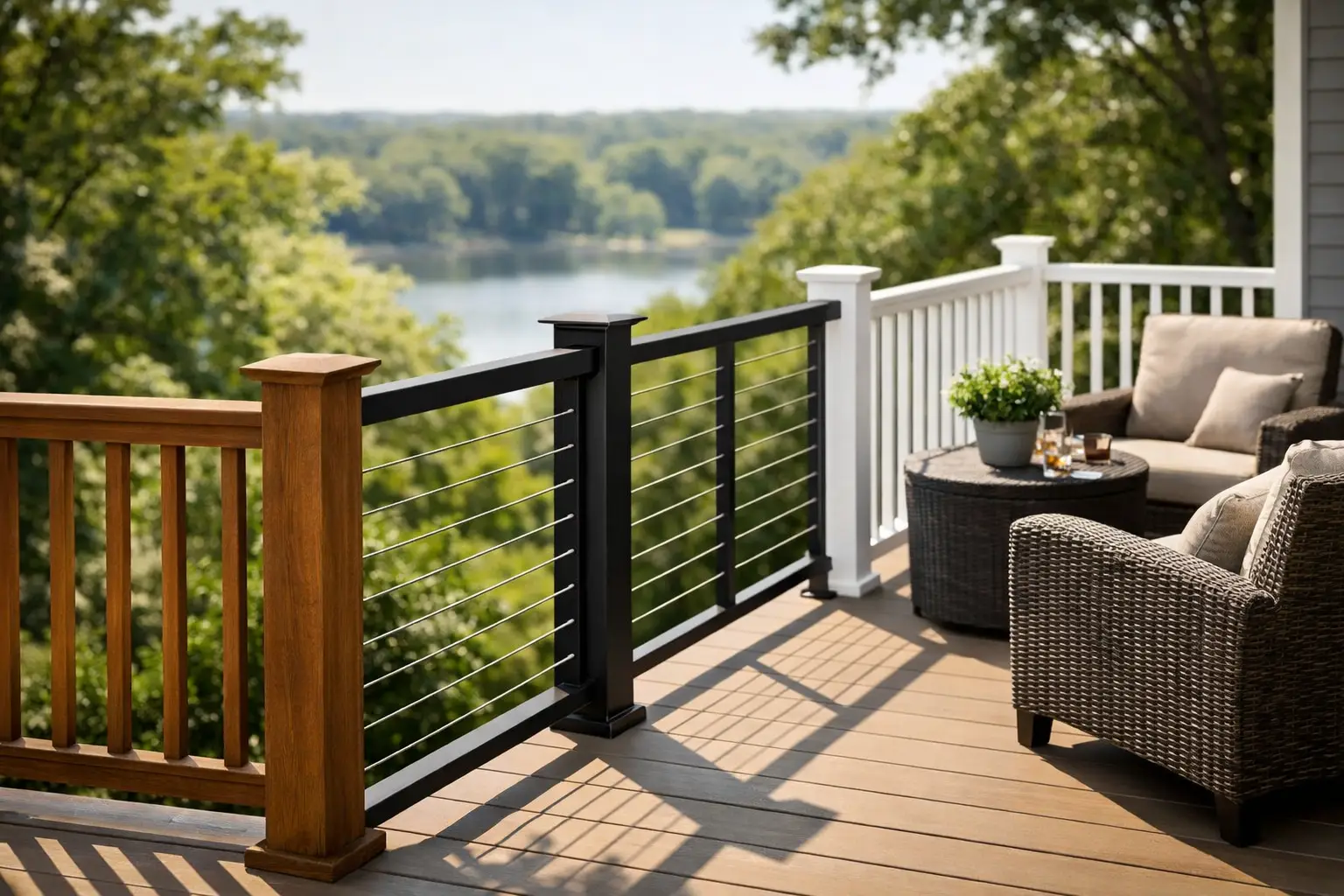
A deck can look solid underfoot and still feel unfinished if the railing is wrong. Homeowners shopping for the best deck railing options usually are not just picking a style – they are balancing safety, view, maintenance, weather exposure, and long-term value. Around Kitsap and Mason County, that decision matters even more because rain, salt air, damp winters, and summer sun all take a toll on outdoor materials.
The right railing should do three things well. It should keep people safe, fit the look of the home, and hold up without turning into a constant maintenance project. Some railings are budget-friendly up front but need regular staining or repainting. Others cost more at installation but save time and money over the years. That trade-off is where most good decisions get made.
What matters most when choosing the best deck railing options
Before comparing materials, it helps to think about how the deck is actually used. A front porch, second-story deck, waterfront deck, and rental property all have different priorities. A family with kids may care most about safety and easy cleaning. A homeowner with a view may want minimal visual obstruction. A landlord may want something durable that keeps maintenance calls down.
Local weather should stay high on the list. In western Washington, moisture is not an occasional issue – it is part of the job. Materials that resist rot, corrosion, and warping tend to perform better over time. That does not mean one railing works for every home, but it does mean outdoor durability should carry real weight in the decision.
Code requirements also matter. Rail height, spacing, stair details, and structural attachment are not areas to guess on. A railing can look great and still fail inspection or, worse, fail when someone leans on it. Good design starts with safety, not decoration.
Wood railing
Wood is still one of the most familiar deck railing choices, and for some homes it is the right fit. It looks natural, can be painted or stained in many colors, and often matches older homes or traditional architecture better than more modern systems. If the deck itself is wood, a wood railing can create a clean, consistent look.
The downside is upkeep. In our climate, wood railings need ongoing attention to stay protected from moisture, movement, and surface wear. Even pressure-treated lumber can crack, twist, or show age faster than many homeowners expect. If you want a lower upfront cost and do not mind regular maintenance, wood can make sense. If you want to install it and mostly leave it alone, wood is usually not the best long-term answer.
Composite deck railing
Composite railing is one of the best deck railing options for homeowners who want a clean appearance without the maintenance demands of wood. It is designed to resist rot, insect damage, and many of the moisture issues that shorten the life of traditional lumber. It also pairs well with composite decking, which makes it a popular choice for full deck upgrades.
Composite systems usually come in a range of colors and profiles, so it is easier to match the home without giving up durability. They tend to cost more than basic wood railing, but many homeowners prefer paying more once rather than repainting, resealing, or replacing components over time.
Not all composite railing is equal, though. Product quality, reinforcement, and installation all matter. A well-built system from a strong manufacturer will generally perform better and look better years down the road than a bargain option that cuts corners.
Aluminum railing
Aluminum railing has become a go-to choice for homeowners who want durability, low maintenance, and a more open view. It is especially useful on decks where you do not want heavy visual lines blocking the yard, water, or wooded surroundings. Black aluminum remains a popular look because it feels clean, simple, and works with many home styles.
From a performance standpoint, aluminum checks a lot of boxes. It does not rot, it is lighter than steel, and powder-coated finishes hold up well when the product is properly made and installed. Maintenance is usually limited to basic cleaning.
The main trade-off is appearance. Some homeowners love the crisp, modern look. Others feel it can look too plain next to a classic or craftsman-style home. Cost usually lands above basic wood and can vary depending on layout, stairs, custom details, and whether the railing is part of a larger deck project.
Cable railing
Cable railing is often chosen for one reason first – the view. If your property backs up to the water, woods, or open space, cable can help keep the sightline open while still providing a safe barrier. It has a modern, high-end look that fits well with newer homes and contemporary outdoor living spaces.
That said, cable is not the right answer for every deck. It usually costs more than standard railing systems, and proper installation is critical. Tension has to be right, framing has to be strong enough, and details matter. On some homes, cable can also feel more modern than the architecture supports.
Maintenance is not zero. While the system is generally durable, cables and hardware still need occasional inspection, especially in damp or marine environments. For homeowners who care deeply about preserving the view, that extra investment can be worth it.
Glass panel railing
Glass panel railing offers the clearest view of all. It can make a deck feel more open, brighter, and more upscale, especially on elevated decks or homes with scenic surroundings. When people want a premium finish and minimal obstruction, glass often enters the conversation quickly.
It also comes with a premium price. Glass railing costs more than many other options, and it shows dirt, water spots, and salt residue more easily. In a wet climate, cleaning can become a regular part of ownership if you want it to keep that sharp, polished look.
There is also a style question. On the right home, glass looks excellent. On the wrong home, it can feel out of place. It is a strong choice when the setting and architecture support it, but less convincing when it is picked only because it seems upscale.
Vinyl railing
Vinyl railing appeals to homeowners looking for a lower-maintenance alternative to painted wood. It does not need repainting, and it can be a practical fit for some porches, entry decks, and budget-conscious projects. At first glance, it seems like a simple middle ground.
Its limitations are worth understanding. Vinyl can look less substantial than composite or metal systems, and lower-end products may age poorly with sun exposure or impact. Depending on the style of the home, it can also read more decorative than durable. For some applications it works fine, but it is usually not the first recommendation when long-term strength and premium appearance are top priorities.
Mixed-material railings
Some of the best-looking decks use a combination of materials rather than sticking with one. A composite post and top rail with aluminum balusters is a common example. Wood framing with cable infill is another. These hybrid approaches can give homeowners a better balance of style, maintenance, and cost.
The benefit is flexibility. You can put visual emphasis where it matters and control spending where it does not. The challenge is making sure the finished railing looks intentional, not pieced together. Mixed-material systems work best when the design fits the house and the installation is handled carefully.
Which deck railing option is best for your home?
If your priority is the lowest upfront cost, wood may still be in the running. If your priority is less maintenance and a long service life, composite and aluminum usually rise to the top. If your deck overlooks a view, cable or glass may be worth serious consideration. If you own a rental or manage multiple properties, durable low-maintenance systems often make the most financial sense over time.
Most homeowners are happiest when they stop chasing the cheapest option and start looking at total value. A railing is not just trim for the edge of a deck. It is a safety feature, a design feature, and a product that has to live outdoors year after year.
That is why in-person planning matters. The best railing on paper may not be the best fit once you consider the home style, deck height, exposure to weather, and how much upkeep you realistically want to handle. A good contractor will walk through those trade-offs clearly and help you choose a system that looks right and performs well.
For many homes in this area, the sweet spot is a railing that gives you strong safety, low maintenance, and a finish that still looks good years from now. If you choose with that standard in mind, you are far more likely to end up with a deck you enjoy every time you step outside.
Leave a Reply