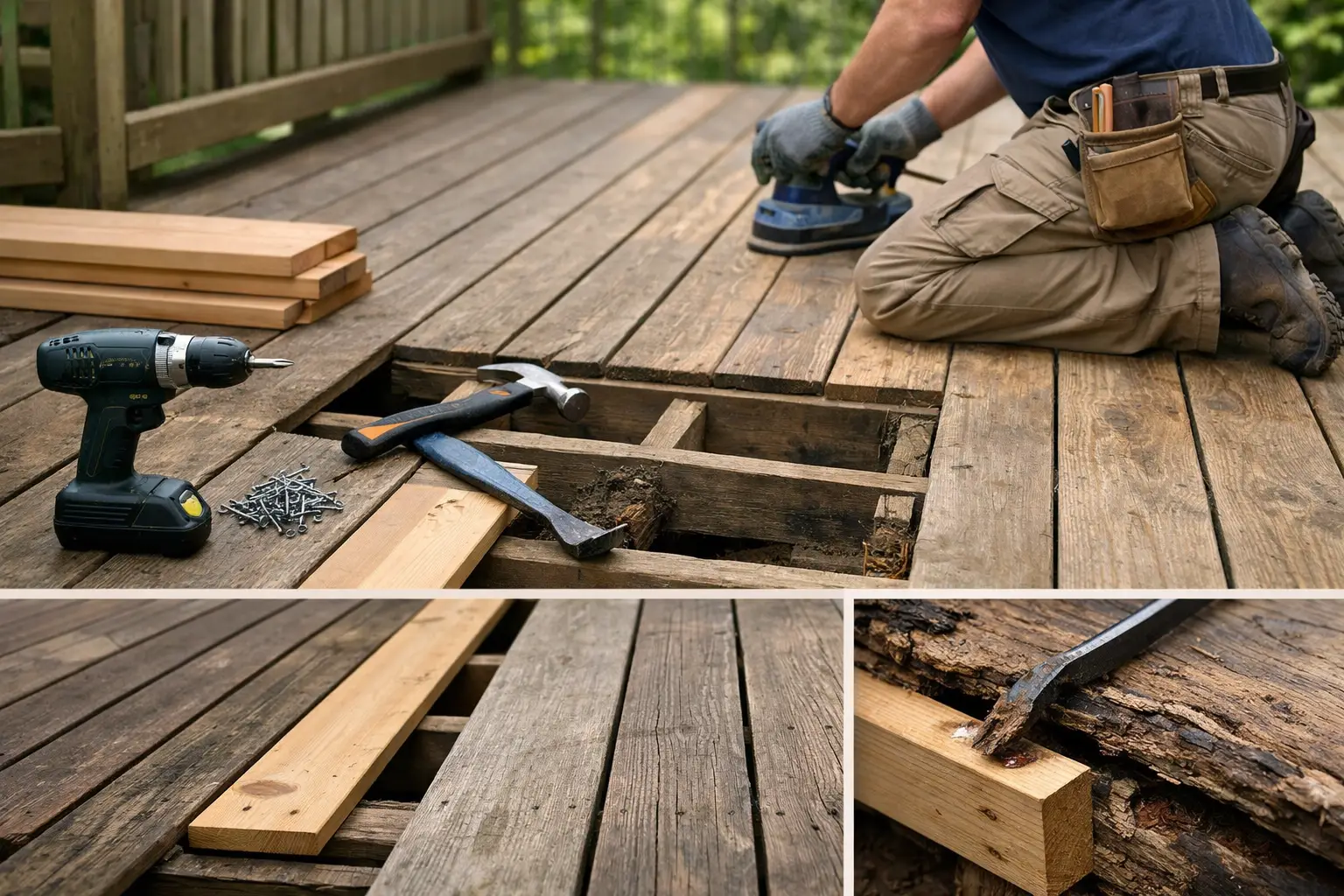
A deck can look fine from the yard and still have real problems underfoot. One soft board, one loose railing, or one rusted connector can turn a good outdoor space into a safety issue fast. If you’re asking what does deck repair include, the short answer is this: it depends on the condition of the deck, but the work usually covers both visible surface damage and the hidden structural parts that keep the whole thing safe.
For homeowners and property managers in Western Washington, that matters more than most people realize. Our wet climate is hard on wood, hardware, fasteners, and framing. Water gets into small cracks, mildew builds up, rot spreads, and sections that once felt solid start to weaken. Good deck repair is not just cosmetic work. It is a careful look at how the deck is holding up from top to bottom.
What does deck repair include on a typical project?
Most deck repair jobs start with an inspection of the walking surface, rails, stairs, and structural framing. The goal is to find out whether the issue is isolated to a few boards or whether there are deeper problems with joists, posts, beams, connectors, or the ledger board where the deck attaches to the house.
In many cases, deck repair includes replacing damaged or rotted deck boards, tightening or rebuilding loose railings, repairing unsafe stairs, and correcting framing that has weakened over time. It can also include replacing corroded hardware, reinforcing attachment points, fixing sagging sections, and addressing water damage that threatens the deck’s lifespan.
The reason this work varies is simple. Two decks can have the same symptom and very different causes. A shaky railing might just need new fasteners, or it could point to rotted framing below. A cracked board could be one isolated piece, or it could be part of a broader moisture problem that affects the whole surface.
Surface repairs are only part of the job
When people think about deck repair, they often picture replacing a few top boards. That is often part of it, but not the whole story. Surface-level repairs usually involve deck boards that are split, cupped, soft, warped, loose, or heavily weathered.
These repairs matter because the deck surface takes constant abuse from rain, foot traffic, furniture movement, and sun exposure. Over time, boards can become slippery, uneven, or weak enough to flex when walked on. Replacing those boards helps restore both appearance and safety.
Sometimes the surface can be repaired in sections. Other times, especially on older decks, patching a few boards creates a mismatch in material condition or spacing. That does not always mean a full rebuild is necessary, but it does mean the right fix should balance safety, appearance, and long-term value.
Railing and stair repairs are common for a reason
Loose railings are one of the biggest red flags on any deck. If the railing moves when you lean on it, there is a problem. That problem might be at the post connection, the fasteners, the framing beneath the post, or the railing system itself.
Deck repair often includes rebuilding rail sections, replacing damaged balusters, securing rail posts, and correcting spacing or height issues when the existing setup is no longer safe. On stairs, repairs may involve replacing worn treads, fixing uneven risers, securing stringers, or rebuilding handrails that no longer feel solid.
These are not small details. For families, guests, tenants, and older adults especially, stairs and railings are where accidents happen. A deck that looks decent in photos can still fail where it matters most.
What deck repair includes below the surface
The most important part of a deck is the part you usually do not see. Framing is what carries the load. If joists are rotting, beams are undersized, posts are failing at the base, or the ledger board is compromised, surface repairs alone will not solve the problem.
This is where a professional repair approach makes a difference. A proper assessment looks at joist spacing, connection points, flashing, post anchors, beam integrity, and moisture damage around structural members. In some projects, the framing is still solid and only isolated repairs are needed. In others, hidden rot has spread farther than expected.
One of the most critical areas is the ledger board connection to the house. If water has gotten behind it or flashing was never installed correctly, the deck may be pulling away from the structure. That is a serious issue and one that should be addressed quickly.
Hardware, fasteners, and connectors matter more than most people think
Even if the wood looks decent, failing hardware can create a dangerous deck. Nails back out. Screws loosen. Brackets rust. Older decks may have hardware that was never rated for exterior use or no longer meets current best practices.
Deck repair can include replacing rusted joist hangers, adding structural screws, upgrading brackets and post bases, and correcting weak connection points that have developed over time. In coastal and damp environments like Kitsap and Mason Counties, corrosion moves faster than many property owners expect.
This kind of repair is not flashy, but it is often the difference between a deck that feels solid and one that keeps shifting, squeaking, or sagging. Strong materials and proper fastening help a repaired deck hold up through the next round of wet seasons.
Rot repair and water damage are major factors in Western Washington
If your deck is wood, moisture is always part of the conversation. Rot repair is one of the most common reasons homeowners call for deck service. Water tends to collect around fasteners, at board ends, near stair connections, around posts, and where framing meets the house.
A repair contractor may need to remove damaged boards or trim to find how far the rot extends. Sometimes the damage is limited to one section. Sometimes it has spread into joists, rim boards, or support posts. The right repair depends on how deep the damage goes and whether the surrounding structure is still sound.
This is one reason quick patch jobs often fail. If the visible damage gets replaced but the source of the moisture problem is left alone, the same issue comes back. Good repair work addresses both the damaged material and the reason it failed.
Repair or replace? It depends on age, materials, and overall condition
Not every damaged deck needs to be torn out. At the same time, not every deck is worth continued patching. If the problems are limited, the framing is solid, and the deck still has years of life left, repair can be the smart move.
If the deck has widespread rot, outdated construction methods, chronic movement, multiple failing sections, or structural issues throughout, replacement may be more cost-effective in the long run. This is especially true if you are repairing the same areas again and again.
That is where honest guidance matters. A dependable contractor should be able to tell you whether a focused repair will solve the issue or whether you are putting money into a structure that is near the end of its useful life.
What to expect from a professional deck repair visit
A solid repair process usually starts with an in-person evaluation. The contractor should look at visible wear, test suspect areas, inspect framing where accessible, and talk through how the deck is used. A family gathering deck has different load and safety considerations than a small back landing on a rental property.
From there, you should get a clear explanation of what needs attention now, what may need monitoring later, and what options make sense for your budget and goals. Some owners want the safest repair possible to extend the deck’s life a few more years. Others want to repair with future upgrades in mind, especially if they are considering composite decking or railing improvements later.
At Kitsap Maintenance, that practical approach matters because customers are not just buying boards and fasteners. They are hiring someone to protect the function, safety, and value of their property.
When to call for deck repair
If your deck feels bouncy, has soft spots, shows cracking around posts, has railings that move, or has boards that are splintering or separating, it is time to get it checked. The same goes for visible rot, standing water, rusted hardware, stair movement, or any sign that the deck is pulling away from the house.
Waiting usually makes repairs more expensive. Moisture damage spreads. Small connection failures become structural issues. What could have been a focused repair can turn into a much larger project after another wet season.
A safe deck should feel stable, drain properly, and hold up to normal use without movement or concern. If yours does not, it is worth getting a professional opinion before the next barbecue, tenant turnover, or holiday gathering puts more weight on a problem area.
The best time to repair a deck is when the issue is still manageable. A straightforward fix today can save you from a major rebuild later and give you back a space you can actually use with confidence.
Leave a Reply