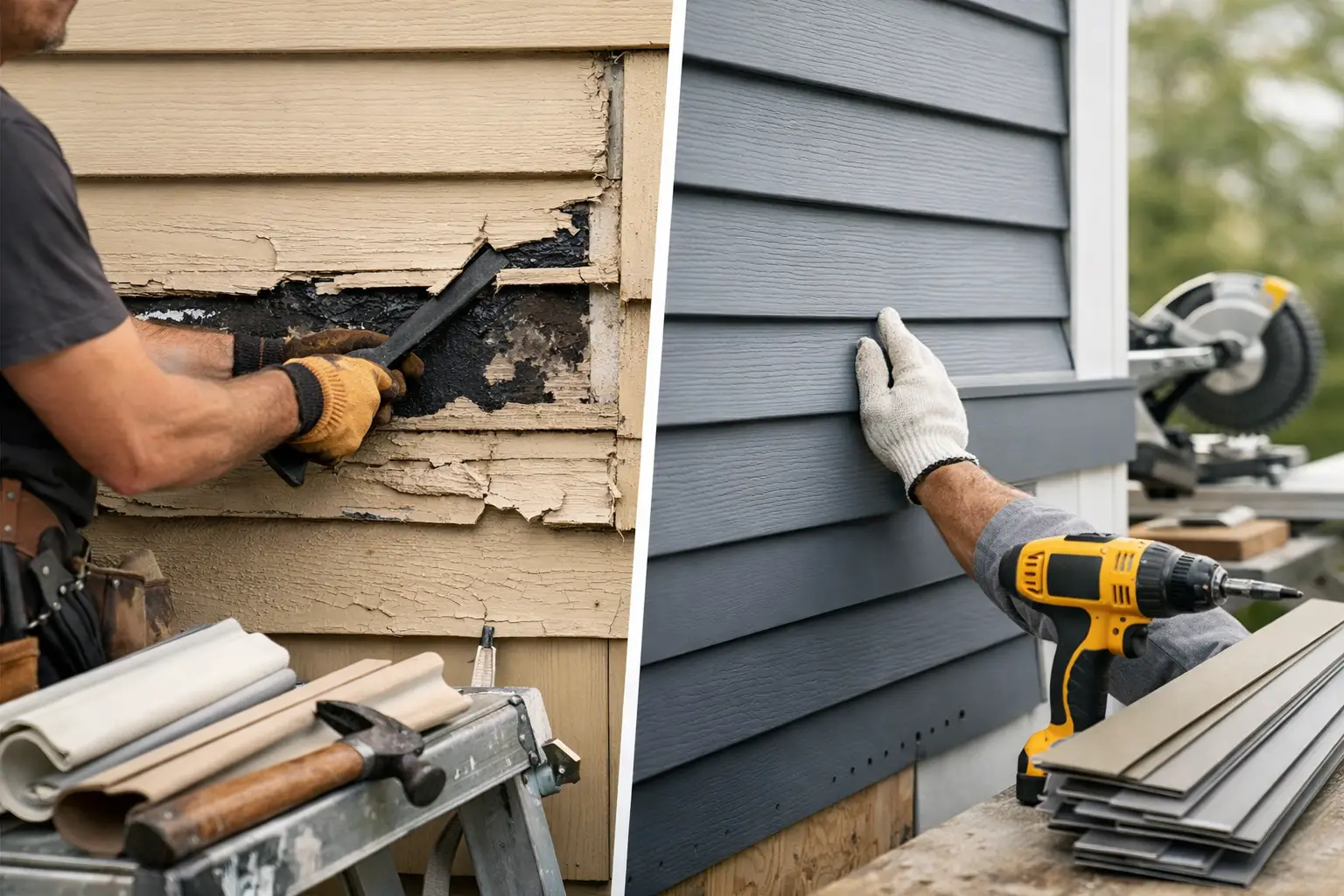
A small crack in your siding rarely stays small in Western Washington. Between wind-driven rain, damp winters, and hidden moisture, what looks like a cosmetic issue can turn into rot, mold, or structural damage faster than most homeowners expect. That is why siding repair vs replacement is not just a budget question. It is a protection question.
For homeowners, landlords, and property managers in Kitsap and Mason Counties, the right call depends on what is happening behind the siding as much as what you can see from the driveway. Some homes need a focused repair and can get years of added life from it. Others are better served by replacing failing sections or the full exterior before the damage spreads.
How to think about siding repair vs replacement
The simplest way to look at it is this: repair makes sense when the problem is limited, the rest of the siding is still doing its job, and the underlying wall system is sound. Replacement makes more sense when damage is widespread, the material is reaching the end of its service life, or moisture has already started affecting the sheathing, framing, or insulation.
This is where homeowners sometimes get stuck. A few loose boards or a patch of swelling might not seem serious. But siding is not just there to improve curb appeal. It is your home’s outer shield. When that shield is compromised, water has a way of finding the weak spots.
A good contractor does not just look at the visible damage and throw out a number. They look at age, material type, installation quality, ventilation, trim condition, caulking failure, and whether there is rot around windows, doors, and lower wall sections.
When siding repair is the smart move
Repair is often the right answer when the damage is isolated and the existing siding is still in overall good condition. If a branch cracked a few boards during a storm, if one wall gets hit harder by weather than the rest of the house, or if there is a limited area of rot near a hose bib or window, targeted repair can be cost-effective and practical.
This approach works best when the replacement material can still be matched reasonably well and the surrounding siding is not brittle, warped, or heavily faded. In those cases, a repair can stop moisture intrusion, restore the look of the home, and buy you time before a larger investment is needed.
Repair also makes sense for landlords and property managers trying to address a known issue quickly without overbuilding the scope. If the siding failure is not systemic, there is no reason to replace an entire exterior just because one section took damage.
That said, the quality of the repair matters. A proper siding repair may involve removing damaged material, checking for hidden rot, replacing affected sheathing, reinstalling moisture barriers, and then fitting new siding and trim so the wall performs correctly again. A surface-level patch may look fine for a few months and still fail the first hard rainy season.
Signs a repair may be enough
If the damage is confined to a small area, the siding is under halfway through its expected lifespan, and there is no evidence of broad moisture intrusion, repair is usually worth considering. The same goes for impact damage, localized pest damage, or isolated board failure caused by installation mistakes.
Homes with newer siding often fall into this category. So do properties where the issue was caught early, before the sheathing and framing were affected.
When replacement is the better investment
There is a point where repeated repairs stop saving money. If your siding is failing in multiple places, separating at seams, swelling along lower edges, or showing signs of widespread rot, replacement is often the more honest solution.
The same is true if the material has become hard to match, if repairs have already been done more than once, or if moisture is getting behind the walls in several locations. At that point, you are not really fixing the problem. You are chasing it.
Full replacement can also be the smarter move when homeowners are already planning exterior upgrades such as new windows, trim replacement, repainting, or rot repair. Coordinating that work often makes more sense than tackling the same wall system in phases.
For older homes in our region, replacement may uncover issues that have gone unnoticed for years. That can sound intimidating, but it is often better to address hidden damage on your terms rather than after it shows up as interior staining, soft drywall, or structural decay.
Signs it is time to replace siding
If you see widespread cracking, warping, soft spots, recurring leaks, peeling interior paint near exterior walls, or visible rot around trim and penetrations, replacement deserves serious consideration. High maintenance demands are another clue. When siding needs constant caulking, patching, and repainting just to stay functional, it may be nearing the end of the line.
Energy performance can play a role too. While siding itself is not insulation, replacing an aging exterior can create the opportunity to improve weather resistance and correct wall assembly issues that affect comfort and efficiency.
The hidden factor: what is behind the siding
One reason siding decisions are not always straightforward is that the real damage may be hidden. Water can get in around windows, rooflines, decks, penetrations, and failed flashing long before the siding shows obvious symptoms. By the time boards start swelling or paint starts bubbling, the sheathing underneath may already be compromised.
That is why inspection matters. In many cases, what starts as a repair estimate turns into a broader discussion once the damaged area is opened up. Sometimes that confirms a simple fix. Other times it reveals rot that has spread farther than expected.
This is especially common on homes where decks attach to exterior walls, where sprinkler systems keep lower siding wet, or where vegetation traps moisture against the house. In the Pacific Northwest, those small conditions can add up.
Cost matters, but so does timing
Most property owners start with the same question: which option costs less? In the short term, repair usually does. But the lower upfront number is not always the lower long-term cost.
A well-timed repair can absolutely be the right financial move. It preserves usable materials, avoids unnecessary disruption, and solves the immediate issue. But if that repair is only delaying a bigger failure by one or two rainy seasons, replacement may offer better value.
Timing also matters from a scheduling standpoint. If your siding is actively allowing water in, waiting to “see how it does” can make a manageable project much more expensive. Rot does not pause because a repair was postponed.
For landlords and managers, there is another layer. Delayed exterior work can lead to tenant complaints, interior repairs, and turnover issues. Addressing siding problems early is often cheaper than dealing with the chain reaction they cause.
Material, age, and match all affect the decision
Not all siding ages the same way. Wood siding may be repairable for years if maintenance has been consistent. Fiber cement often holds up well but still needs proper installation and flashing. Older composite or hardboard products can be more difficult because once moisture gets in, deterioration can spread fast.
Matching is another practical concern. A repair only makes visual sense if the new section blends reasonably with the old. Sometimes that is easy. Sometimes fading, discontinued profiles, or previous paint layers make a clean match nearly impossible. In that case, replacement may be the better choice simply for a consistent finished result.
Choosing the right path for your property
The best siding decisions are made with a clear look at the whole wall system, not just the damaged spot. You want to know how far the issue extends, whether moisture has gotten behind the exterior, and how much useful life the remaining siding really has.
That is where working with an experienced local contractor helps. A company familiar with homes in Kitsap and Mason Counties will understand the weather exposure, common failure points, and how to separate a repairable issue from a replacement-level problem. At Kitsap Maintenance, that practical approach matters because the goal is not to sell more work than you need. It is to protect the home and do the job right.
If you are weighing siding repair vs replacement, the smartest next step is not guessing from the ground. Get the siding inspected, ask what is causing the failure, and look at the decision through the lens of both immediate cost and long-term protection. A solid repair can be money well spent. So can a replacement done before hidden damage gets worse. The right answer is the one that keeps your property dry, sound, and worth investing in.
Leave a Reply