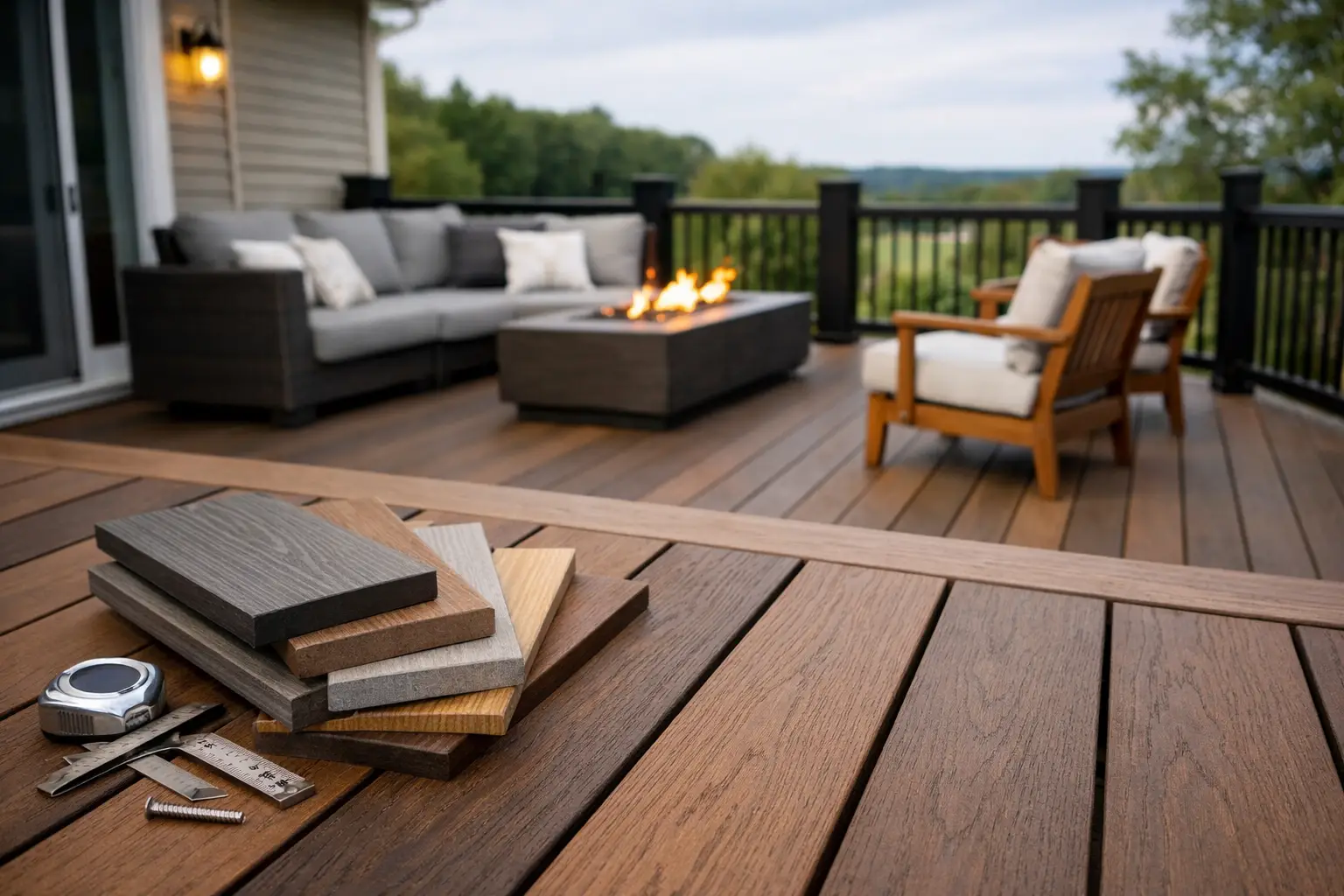
A deck looks simple from the yard. Up close, the material choice decides how much time, money, and frustration that deck will cost you over the next 10 to 25 years. This trex decking review guide is written for homeowners and property owners who want the straight answer – where Trex performs well, where it has limits, and when it makes sense to spend more upfront.
If you are comparing Trex to pressure-treated wood, cedar, or other composite brands, the biggest question is usually not whether Trex works. It does. The better question is whether it fits your climate, budget, and expectations. Around Western Washington, that matters because decks deal with long wet seasons, shade, debris, and constant exposure to moisture.
Trex decking review guide: what Trex does well
Trex has built a strong reputation because it solves the problem many homeowners are tired of dealing with: wood maintenance. Traditional wood decks can look great when new, but they demand regular staining, sealing, cleaning, and repair. Miss a maintenance cycle or two, and the deck starts showing it fast.
Trex reduces that workload. You still need to clean it, especially in damp and shaded areas, but you are not signing up for the same schedule of sanding, staining, and sealing that wood requires. For many homeowners, that is the real value. It is not just about appearance. It is about owning a deck you can use without treating it like a part-time job.
Trex also holds color better than many natural wood options. That matters if you want a consistent finished look year after year. The boards are manufactured for uniformity, which helps create a cleaner appearance across the whole deck surface.
Another strength is resistance to common problems like splintering and insect damage. That does not mean the deck system is maintenance-free from top to bottom. Framing, fasteners, drainage, and installation details still matter. But as a finished decking surface, Trex is built for longevity and predictable performance.
How Trex compares to wood in real life
The strongest case for Trex is long-term ownership. The strongest case for wood is lower initial cost.
If your goal is the cheapest way to build a deck right now, Trex usually will not win. Material costs are higher, and in many cases the installation details are more precise. Hidden fastener systems, board spacing, framing alignment, and picture-frame layouts can all add labor compared to a basic wood build.
But if your goal is lower upkeep and a more stable finish over time, Trex starts to make more sense. Wood moves more, checks more, and needs more attention. In wet climates, that difference becomes more noticeable. Homeowners often underestimate the cost of maintenance because they do not factor in supplies, labor, or the simple reality that many decks get neglected once life gets busy.
Trex is not identical to wood in look or feel. Some people still prefer the natural grain variation and warmth of real lumber. That is a fair point. Composite has improved a lot, but if you want the exact character of cedar or hardwood, Trex is a different product and should be judged that way.
Trex decking review guide: the trade-offs you should know
A good review guide should not act like every product is perfect. Trex has clear advantages, but there are trade-offs.
The first is heat. Like most composite decking, Trex can get hotter in direct sun than many homeowners expect. Darker colors tend to hold more heat. If your deck gets full afternoon sun and you like walking barefoot outside in summer, color choice matters.
The second is surface wear. Trex is durable, but not indestructible. Heavy furniture dragged across the boards, sharp metal edges, or dropped tools can still mark the surface. This is especially relevant on rental properties or high-traffic family decks where the space gets hard use.
The third is substructure quality. Homeowners sometimes focus only on the boards, but the framing below is what supports everything. A premium decking product installed over weak framing, poor drainage, or bad spacing will not perform the way it should. That is not a Trex problem. It is an installation problem, and it is one of the biggest reasons deck projects disappoint.
There is also the question of value. Trex tends to make the most sense when you plan to stay in the home, care about long-term appearance, or want a deck that asks less from you over time. If you are flipping a property or solving a short-term issue, a simpler material may be enough.
Understanding the Trex product lines
Trex offers multiple product tiers, and this is where many homeowners get overwhelmed. Not every Trex board is built the same, priced the same, or finished the same.
At the more budget-conscious end, you will usually see options that give you the core benefits of composite decking without the more premium color patterns or stronger shell protection. These products can work well for straightforward decks where function matters most.
As you move up the line, you get more realistic wood-look patterns, richer color options, and stronger resistance to fading and staining. That can be worth it if the deck is a major feature of the home rather than just a basic outdoor platform.
The right choice depends on how you use the space. A front entry deck, rental property, or utility-focused backyard platform may not need the highest-end product. A large entertaining deck with custom railings, lighting, and a covered outdoor living layout probably deserves a better board with a more finished look.
Installation matters more than most reviews admit
One reason online product reviews can be misleading is that they mix material issues with workmanship issues. A poorly installed composite deck can lead to drainage problems, uneven board lines, movement, trapped debris, and a finished result that never looks right. Then the homeowner blames the brand.
Trex decking needs accurate framing, proper gapping, and a plan for ventilation and water runoff. In our region, where moisture is part of life, those details are not optional. They directly affect how the deck looks and lasts.
This is also why certification and hands-on experience matter. A contractor who installs Trex regularly understands the product line, the fastening systems, the manufacturer requirements, and the design choices that help the deck age well. That experience can make the difference between a deck that still looks sharp years later and one that starts creating callbacks.
Is Trex worth the price?
For many homeowners, yes. For every homeowner, not automatically.
Trex is worth the price when you value lower maintenance, cleaner long-term appearance, and better resistance to common wood-deck headaches. It is also worth it when the deck is a meaningful part of how you use your home, whether that means family gatherings, outdoor cooking, or simply wanting a space that feels finished and dependable.
It may be harder to justify if your main concern is upfront cost alone. Composite decking is an investment, and that investment makes more sense when you look past year one. If the budget is tight, there may be ways to scale the project size, simplify the design, or choose a different Trex line rather than abandoning the material completely.
That conversation should be honest. A dependable contractor will not push a premium board where it does not fit the job. They should help you weigh cost, appearance, use, and expected ownership timeline.
Who Trex is best for
Trex is a strong fit for homeowners who are tired of constant deck upkeep, property owners who want durability with a more polished look, and families who plan to use their outdoor space often. It also makes sense for clients who want a deck that supports long-term property value rather than just solving a short-term need.
It can be especially practical in areas where wet weather, tree cover, and seasonal debris put regular stress on exterior surfaces. That does not eliminate cleaning, but it reduces the cycle of refinishing and repair that often comes with wood.
For local homeowners looking at a new deck or a replacement, working with a Certified Trex Deck Expert like Kitsap Maintenance gives you a clearer read on what product tier fits the project and how it should be built for our conditions.
The best deck material is not the one with the loudest marketing. It is the one that fits your home, your budget, and the way you actually live outside.
Leave a Reply