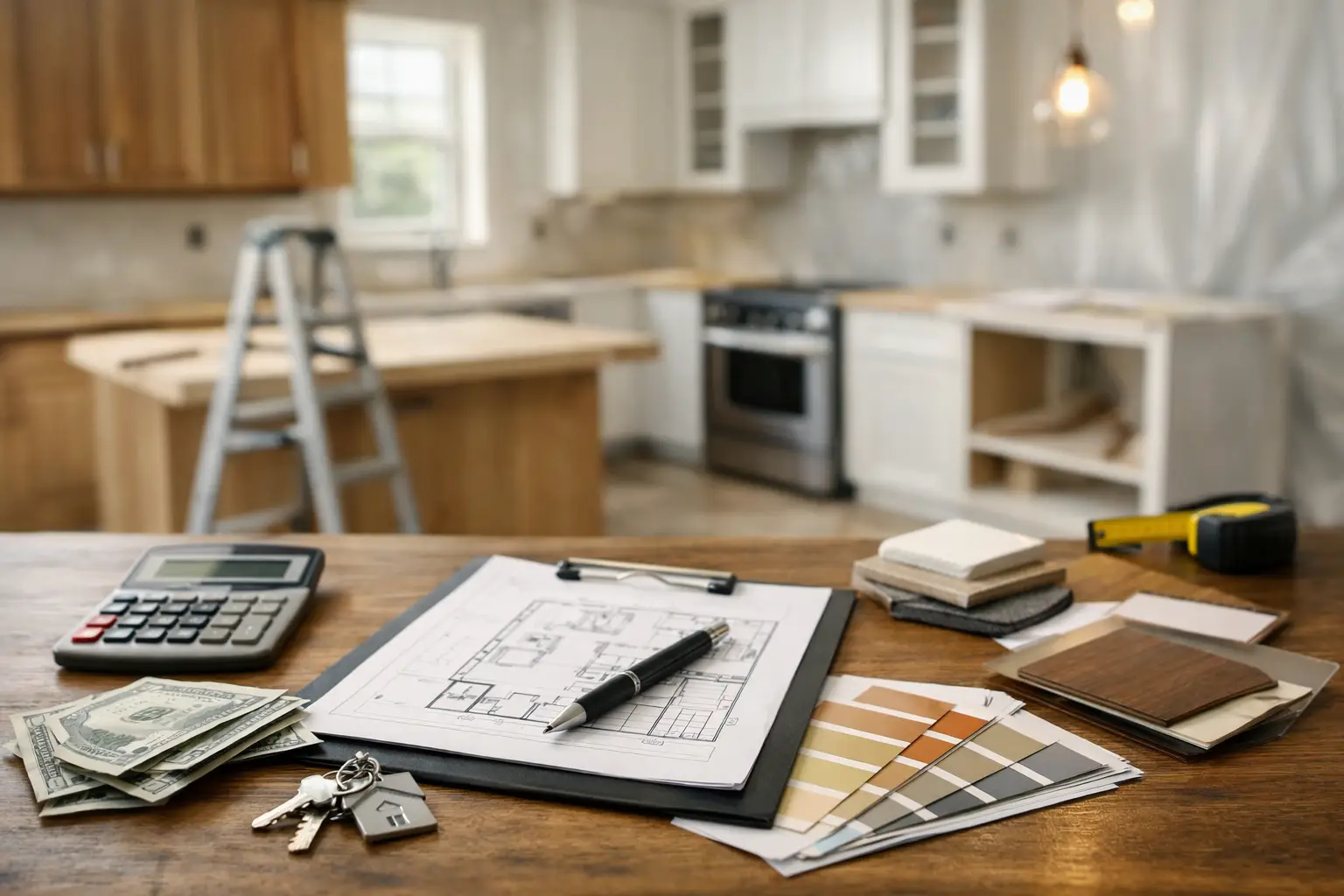
Most kitchen remodel budgets do not fail because of one big mistake. They fail because a dozen smaller costs get missed early – electrical updates, disposal fees, delivery charges, drywall repair, permit fees, and the inevitable surprise waiting behind an old wall. If you are figuring out how to budget kitchen remodel work, the goal is not just to pick a number that sounds reasonable. The goal is to build a realistic plan that protects your home, your timeline, and your wallet.
A kitchen is one of the hardest-working rooms in the house. In many homes across Kitsap and Mason County, it also carries years of wear, outdated layouts, and older materials that do not reveal their condition until demo begins. That is why a smart budget starts with priorities, not Pinterest photos.
How to budget kitchen remodel work without guessing
The first step is deciding what kind of remodel you are actually planning. Homeowners often say they want a full kitchen remodel when they really mean one of three different jobs. They may want a cosmetic refresh, a functional upgrade, or a full layout change. Those are very different projects with very different price ranges.
A cosmetic refresh usually keeps the footprint the same and focuses on surfaces. Think paint, flooring, countertops, fixtures, backsplash, or cabinet refacing. A functional upgrade may include new cabinets, better storage, updated lighting, and appliance replacements, while keeping plumbing and major wall locations mostly intact. A full remodel typically means moving plumbing, reworking electrical, changing the layout, or opening walls. That is where costs can rise fast.
If you start by saying, “I have $25,000,” but your wish list really calls for a $60,000 layout overhaul, frustration shows up early. A better approach is to define the scope first, then compare that scope to what your budget can honestly support.
Start with the parts of the kitchen that drive cost
In most kitchen remodels, cabinets take the biggest share of the budget. Stock cabinets cost less than semi-custom, and semi-custom costs less than fully custom work. But price is not the only factor. Lead times, durability, storage features, and fit all matter. If your kitchen has an unusual layout or you want to maximize every inch, cheaper cabinets may not give you the result you want.
Countertops are another major line item. Laminate keeps costs down. Butcher block can be warm and practical if you are willing to maintain it. Quartz is popular because it balances appearance and durability. Natural stone can look great, but prices vary and fabrication costs add up.
Labor is where many budgets need a reality check. Even when materials look manageable on paper, the work behind them is what makes the kitchen safe, functional, and built to last. Demolition, framing, drywall, flooring, trim, cabinet installation, finish carpentry, painting, and subcontracted plumbing or electrical coordination all need to be accounted for.
Appliances can also swing the budget more than expected. Standard models may fit a practical budget, but panel-ready appliances, built-in units, specialty ventilation, or larger ranges can change cabinetry, electrical requirements, and installation costs.
Build your budget in layers, not one lump sum
One of the most practical ways to budget a kitchen remodel is to separate costs into layers. Start with the core construction cost. That includes demolition, labor, rough-in work, installation, and finishing. Next, price your material selections such as cabinets, countertops, flooring, fixtures, hardware, and backsplash.
Then add the supporting costs people often forget. Permits, design help, waste disposal, material delivery, temporary kitchen setup, and eating out during the project can all affect your total. If your home is older, you should also be prepared for code-related updates. Bringing electrical work up to current standards is not the flashy part of a remodel, but it matters.
Finally, add a contingency fund. For many remodels, 10 to 20 percent is a sensible range. Older homes usually need the higher end of that range because hidden issues are more common. Water damage under old flooring, rot around windows, uneven subfloors, and outdated wiring are not unusual discoveries.
This layered approach gives you a working budget that is grounded in reality. It also helps you make smarter trade-offs before construction starts instead of during a stressful change order conversation.
Where to save and where not to cut corners
Every homeowner wants value, and there is nothing wrong with looking for smart savings. The key is knowing which decisions protect the long-term quality of the project and which ones can be adjusted without regret.
Keeping the existing layout is one of the strongest ways to control cost. If the sink, range, and refrigerator locations work reasonably well now, leaving plumbing and gas lines in place can save a substantial amount. That does not mean your kitchen has to look dated. You can still improve flow, storage, lighting, and finishes without moving every connection.
Cabinet strategy matters too. If your cabinet boxes are in good shape, refacing or repainting may be worth considering. If they are worn out, poorly built, or badly configured, putting money into new doors alone may not solve the real problem. The right answer depends on condition and goals.
Do not cut corners on installation quality, electrical work, plumbing work, or moisture-prone areas. Cheap labor often becomes expensive repair work. The same goes for flooring prep and cabinet installation. A beautiful countertop will not perform well if the cabinets under it are not level and secure.
Lighting is another place where quality planning pays off. A kitchen that looks good in daylight but feels dim at night will not serve you well. Layered lighting with ambient, task, and accent options usually gives better results than one center fixture trying to do everything.
How to budget kitchen remodel plans around real priorities
A good kitchen budget reflects how you actually live. For a family that cooks every night, durable counters, better workflow, and dependable appliances may matter more than luxury finishes. For a rental property or turnover project, durability, clean appearance, and predictable maintenance may be the smarter investment. For a homeowner planning to stay long term, it may make sense to spend more on layout, storage, and materials that hold up over time.
This is where honest ranking helps. Choose your top three must-haves and your bottom three nice-to-haves. If costs start rising, you will know what to protect and what can wait. Maybe soft-close drawers and a strong ventilation system matter more than a pot filler. Maybe quartz counters stay, but the custom hood detail gets pushed to phase two.
There is no single perfect budget split for every home. It depends on the age of the house, the condition of the kitchen, and whether you are remodeling for resale, rental performance, or your own daily use.
Get contractor pricing early, not after you fall in love with finishes
Too many remodel budgets get built backward. A homeowner picks every finish first, totals the material prices, and assumes labor will fit around that number. Then real bids come in and the math stops working.
A better move is to get contractor input early. An experienced remodeling contractor can tell you whether your budget matches your scope, where hidden costs are likely, and what choices can give you the best return for the money. That kind of guidance is especially important when the project involves structural work, older homes, or multiple trades.
This is also where local experience matters. Material access, permit requirements, subcontractor availability, and housing stock all affect pricing. In our region, many homes have their own quirks, and practical planning beats guesswork every time. Companies like Kitsap Maintenance see these real-world conditions up close, which helps homeowners budget with fewer surprises.
When you review bids, do not compare only the bottom-line number. Look at scope, allowances, timeline, exclusions, and how clearly each estimate explains the work. A lower price is not always a better value if key items are missing.
Plan for the part nobody wants to talk about
Living through a kitchen remodel has its own cost. It may mean setting up a temporary prep area, eating more takeout, moving appliances, and adjusting routines for several weeks. If you work from home or have kids, that disruption is worth factoring into your plan.
Sometimes the least expensive remodel on paper creates the most stress because it drags on or requires too many mid-project decisions. Clear planning up front often saves money simply by reducing delays and change orders.
A solid kitchen budget is not about chasing the lowest possible number. It is about knowing what the project needs, where the money should go, and what trade-offs make sense for your home. When your budget is built around real priorities and realistic costs, you have a much better chance of ending up with a kitchen that works as hard as you do.
If you are planning your next step, start with the honest version of the project, not the idealized one. That is usually where good remodel decisions begin.
Leave a Reply