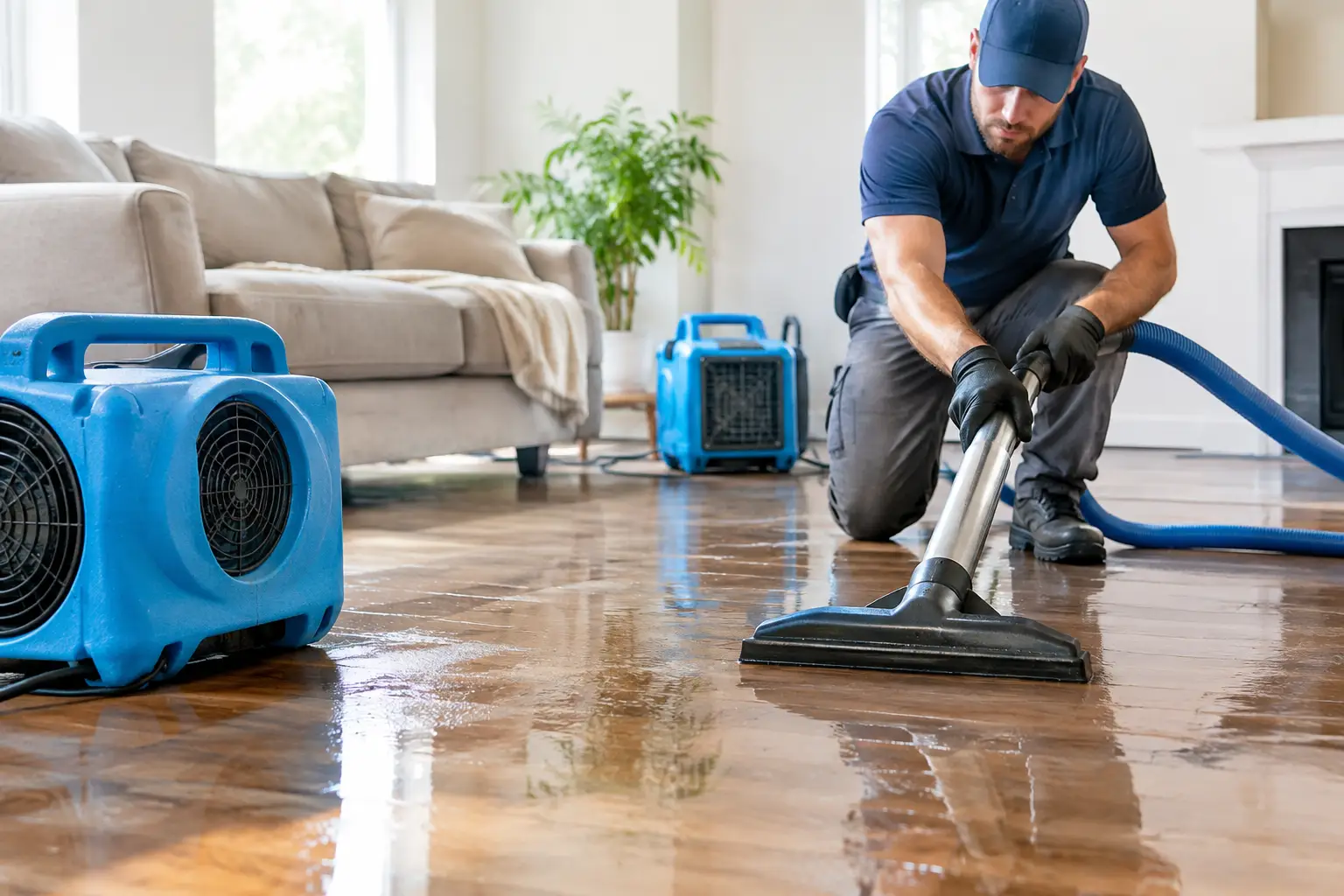
A washing machine hose fails at 2 a.m. A wind-driven rain finds a gap around a window. A toilet overflows while a rental is vacant. In each case, water damage repair starts with the same priority: stop the source, protect people, and get the structure dry before a manageable problem becomes damaged drywall, warped flooring, rot, or mold.
For homeowners, landlords, and property managers in Kitsap and Mason Counties, moisture problems are not something to put off until next week. Our wet climate can keep materials from drying naturally, especially in crawlspaces, basements, wall cavities, and rooms with limited airflow. Fast, practical action protects your property and helps keep repair costs under control.
When Water Damage Repair Cannot Wait
Not every spill requires a restoration crew, but every water event deserves an honest assessment. A small amount of clean water on a tile floor may only need cleanup and ventilation. Water that has soaked into carpet padding, drywall, insulation, subflooring, cabinets, or framing is different. Those materials can hold moisture where you cannot see it.
Water from a failed supply line is generally cleaner than water from a sewer backup, toilet overflow, drain line, or outdoor flooding. The source matters because contaminated water may require removal of affected porous materials rather than simple drying. If you are unsure where the water came from, treat it cautiously until the source is identified.
Call for prompt professional help when water has reached electrical components, traveled behind walls, affected more than one room, soaked structural materials, or sat for more than a day. A musty odor, bubbling paint, soft flooring, swelling baseboards, and staining that continues to grow are all signs that the visible damage may be only part of the job.
What to Do in the First Hour
The first hour is about reducing exposure and stopping additional damage, not tearing out half the room. Move carefully, especially when water is near outlets, appliances, or a ceiling that appears to be sagging.
Take these steps in order when it is safe to do so:
- Shut off the water supply at the fixture, appliance valve, or main shutoff if a plumbing failure is still active.
- Turn off electricity to the affected area at the breaker panel if water is near electrical equipment. Do not enter standing water to reach a panel or outlet.
- Move furniture, rugs, electronics, and personal belongings away from wet areas. Place foil, blocks, or plastic under furniture legs if the floor is wet.
- Document the cause, affected rooms, and damaged belongings with photos and video before major cleanup begins.
- Remove standing water with towels, a wet vacuum, or a pump if conditions are safe, then begin ventilation with fans and open windows when outdoor humidity allows.
Do not run a household vacuum on water. Do not assume a dehumidifier alone will dry wet walls or flooring. And do not puncture a bulging ceiling without first considering what may be above it and whether the ceiling is structurally unsafe. When in doubt, keep people out of the area and call a qualified contractor.
Drying Is Not the Same as Looking Dry
One of the most expensive mistakes after a leak is repairing the visible surface before the building materials underneath are dry. New paint over damp drywall, new flooring over a wet subfloor, or new trim against a saturated wall can trap moisture inside the assembly.
Proper drying often involves removing baseboards, checking behind cabinets, opening limited access areas, and measuring moisture in framing, drywall, and flooring. The scope depends on the material, how long it was wet, and whether the water was clean or contaminated. Solid wood flooring, laminate, engineered flooring, carpet, drywall, and insulation all react differently to moisture.
For example, a hardwood floor may sometimes be dried and repaired if addressed quickly. Laminate flooring often swells at the seams and may need replacement once the core material has absorbed water. Drywall can occasionally be dried after a minor clean-water event, but material that has softened, crumbled, or been exposed to contaminated water should be removed. There is no one-size-fits-all answer, which is why a careful inspection matters.
Common Repairs After a Water Event
Once the source is fixed and the affected area is dry, the repair work should restore both the appearance and the performance of the space. A quality repair is more than covering stains or replacing a few boards. It should address why the water got in and make sure the affected materials are sound.
In many homes, that means some combination of drywall removal and replacement, insulation replacement, flooring repair, trim work, painting, cabinet repair, and subfloor or framing repairs. Exterior sources may call for window flashing repair, siding replacement, roof repairs, deck drainage corrections, or rot repair around doors and penetrations.
Water can also reveal older problems. A leak around a shower may expose a failing wall system behind tile. A soft floor near an exterior door may point to years of poor flashing or damaged siding. It is tempting to request only the cheapest visible fix, particularly with a rental turnover or a busy household. But leaving the underlying entry point uncorrected usually means paying for the same repair twice.
Kitsap Maintenance handles practical repair work after water damage, from drywall and flooring to rot repair, siding, windows, doors, and coordinated plumbing or electrical needs. The goal is straightforward: identify the cause, repair what was affected, and leave the space ready for normal use again.
Insurance, Documentation, and Clear Communication
If you plan to make an insurance claim, notify your carrier early and ask about their documentation requirements. Keep photos, videos, receipts, and notes about the date, source of the water, emergency actions taken, and conversations with adjusters or service providers. Do not throw away damaged materials until your insurer has advised you, unless they create a safety or sanitation issue.
Insurance coverage depends on the policy and the cause of loss. Sudden damage from a burst pipe may be handled differently than long-term seepage, deferred maintenance, groundwater, or flooding. A contractor can explain the condition of your property and the repair scope, but your insurance carrier determines coverage.
Landlords and property managers should also document communication with tenants and provide clear instructions about access, drying equipment, and safe use of the affected area. Quick coordination can limit tenant disruption while helping prevent minor leaks from turning into vacancy-ready renovation projects.
Preventing the Next Water Problem
The best repair bill is the one you avoid. Seasonal maintenance is especially valuable in Western Washington, where rain, wind, damp crawlspaces, and aging exterior materials can expose weak points over time.
Check under sinks and behind appliances for slow leaks. Inspect washing machine supply hoses, water heater connections, dishwasher lines, and refrigerator water lines. Keep gutters and downspouts clear, and make sure drainage carries water away from the foundation. Around windows, doors, siding joints, and roof penetrations, look for cracked caulk, loose flashing, soft trim, peeling paint, or staining.
Inside, pay attention to small clues. A bathroom fan that does not clear humidity, a recurring spot on a ceiling, a floor that feels soft near a tub, or an unexplained musty smell is worth investigating. These are often early warnings, not cosmetic inconveniences.
Choose Repair Work That Solves the Cause
Water damage is stressful because it interrupts daily life and creates uncertainty about what is hidden behind finished surfaces. The right response is not panic or guesswork. It is safe action, a clear inspection, thorough drying, and repair work that deals with the source as well as the damage.
If water has entered your home, rental, or commercial space, act while the problem is still contained. A prompt, honest evaluation can protect the structure, preserve more of the materials you already have, and give you a clear path back to a dry, dependable property.
Leave a Reply