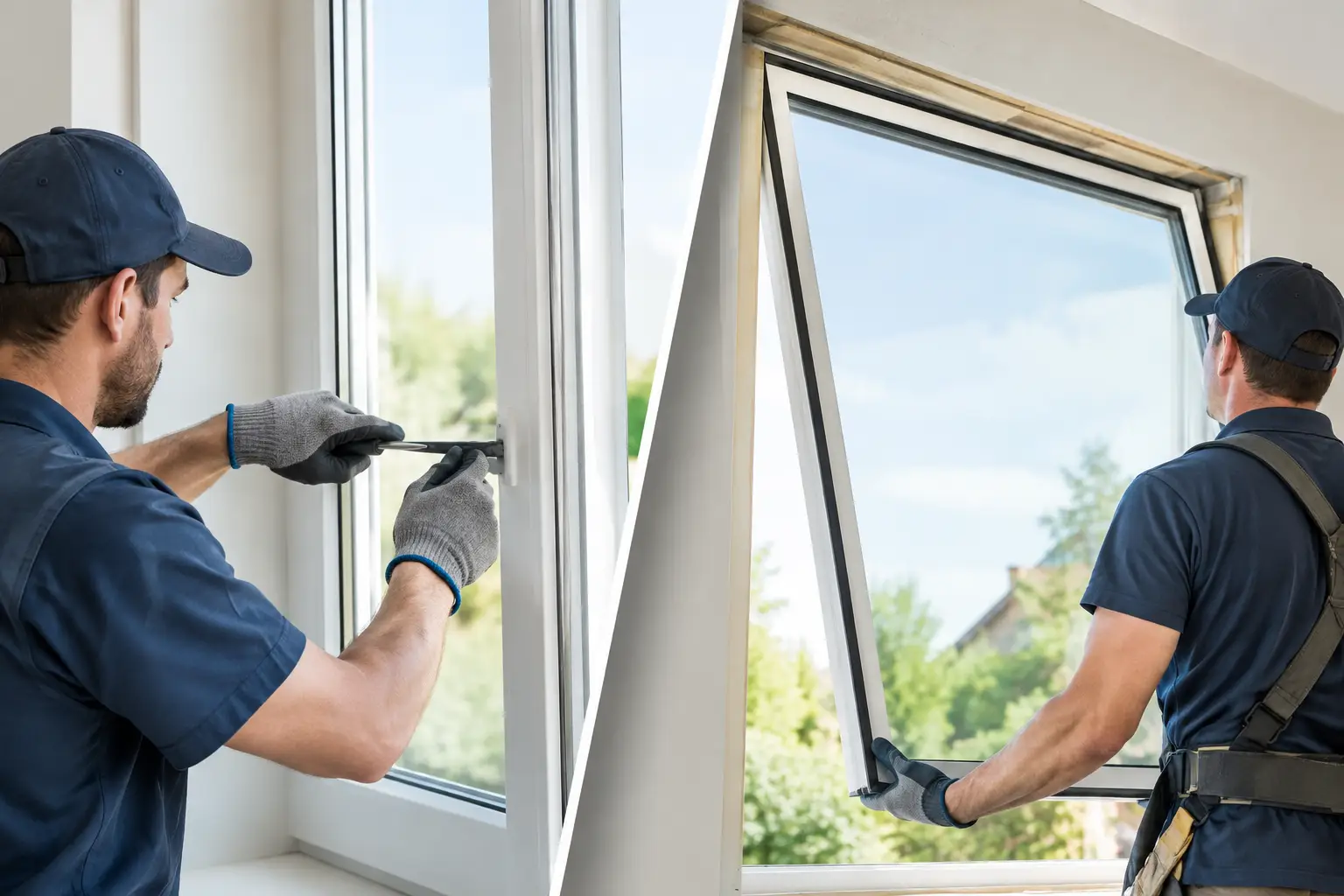
A fogged pane in Silverdale, a drafty bedroom in Bremerton, or a window that will not stay open can quickly become more than an annoyance. The right choice in window repair vs replacement depends on what failed, how old the window is, and whether the surrounding wall has suffered moisture damage. A quick patch can be the smart call. So can a full replacement. The key is knowing the difference before spending money on the wrong solution.
For homeowners, landlords, and property managers across Kitsap and Mason Counties, windows have to stand up to wet seasons, wind-driven rain, and everyday use. An honest evaluation looks beyond the glass. It considers the frame, seals, hardware, trim, siding, and the condition of the opening itself.
Window Repair vs Replacement: Start With the Failure
Not every window problem means the entire unit is done. Many common issues can be repaired when the frame is sound and the window still fits properly in the opening.
A broken latch, worn balance, loose crank, damaged screen, or failed weatherstripping is usually a repair issue. These parts wear out, especially on windows that get opened often or on rental properties where windows see heavier use. Replacing the failed component can restore safe operation and improve the seal without the cost and disruption of installing a new window.
Minor wood rot may also be repairable when it is limited to exterior trim or a small area of the sill. The damaged material must be removed completely, the source of moisture must be corrected, and new trim needs to be properly flashed, caulked, and painted. Covering soft wood with filler or fresh paint may look better for a season, but it does not solve the underlying problem.
Glass can sometimes be repaired as well. If one pane is cracked but the frame and insulated glass system are in good condition, replacing the glass may make sense. For a double-pane window with moisture or haze trapped between panes, a replacement insulated glass unit may be possible depending on the window style and manufacturer.
Repair is often the practical choice when the problem is isolated, the window is otherwise performing well, and matching nearby windows matters. This is especially true for a home with custom wood windows or a property where only one or two units have been damaged.
When Window Replacement Is the Better Investment
Replacement becomes the better answer when repairs would only delay a larger failure. A window with widespread rot, a warped frame, chronic leaking, or multiple failed components is rarely a good candidate for repeated patchwork.
Water intrusion is the biggest concern. If rain is getting behind the siding or trim and reaching framing, insulation, drywall, or flooring, the window may be only one part of the problem. The opening needs to be inspected carefully. Proper repair can involve removing damaged trim or siding, addressing rot, correcting flashing, rebuilding the opening, and installing the new unit so water is directed back to the exterior.
Replacement is also worth considering when several windows have the same issues. A house with old single-pane glass, failing seals, difficult operation, and noticeable drafts may benefit more from a planned replacement project than from a series of service calls. Newer windows can improve comfort, reduce outside noise, and make rooms easier to heat and cool. Energy savings vary by home, insulation levels, heating system, and how much air leakage existed before, so they should not be the only reason to replace windows. Comfort and moisture control are often the more immediate benefits.
Safety and function matter, too. A bedroom window that cannot open may be a safety concern, particularly when it is needed as an emergency escape route. Windows that will not lock, have broken tempered glass, or are severely deteriorated should be addressed promptly rather than treated as cosmetic issues.
For landlords and property managers, replacement can reduce recurring maintenance when a unit has become a repeat trouble spot. A durable, properly installed window may cost more up front, but it can prevent tenant complaints, avoid interior water damage, and reduce the chance of an emergency repair during a storm.
Cost Is More Than the Price of the Window
The least expensive estimate is not always the least expensive outcome. A simple hardware repair may be a clear value. But when a contractor finds soft sheathing, deteriorated framing, damaged drywall, or failing siding around the window, the scope needs to match the actual condition of the home.
A quality window replacement estimate should account for more than removing one window and setting another in its place. Depending on the project, it may include protecting the work area, removing the old unit, repairing hidden damage, installing flashing and weather-resistant materials, insulating the opening, sealing the exterior, reinstalling or replacing trim, and finishing interior details.
This is why two quotes can look very different. One may price a basic insert window installation, while another includes the work needed to correct water damage and build a durable opening. Ask what is included, what conditions could change the price, and how the contractor will handle rot or flashing issues discovered after removal.
A repair-first approach still has value. If a repair gives several more years of useful service and lets you budget for a future replacement, that can be the right decision. It is only a poor value when the same problem returns because the root cause was never fixed.
Insert Windows and Full-Frame Replacements
An insert replacement fits a new window unit inside an existing frame. It can be a good option when the original frame is square, solid, dry, and structurally sound. It typically involves less disruption to interior and exterior finishes.
A full-frame replacement removes the entire window assembly down to the rough opening. This approach is often needed when the frame is rotten, the opening has leaked, the window size is changing, or exterior details need to be rebuilt. It costs more because it involves more labor and finish work, but it provides access to the hidden areas where water damage often starts.
Neither approach is automatically better. The condition of the existing opening should drive the recommendation, not a one-size-fits-all sales pitch.
Signs You Should Schedule an Evaluation Soon
Some window problems can wait for a convenient repair appointment. Others should be inspected before the next stretch of heavy rain. Pay attention to repeated condensation between panes, water stains below a window, peeling paint around interior trim, soft exterior wood, moldy odors, visible gaps, or drywall that feels damp or swollen.
Drafts deserve a closer look as well. A draft may come from worn weatherstripping, but it can also point to a poorly sealed frame or a gap behind trim. If you can see daylight around a closed window, feel cold air during windy weather, or notice insect activity around the frame, the window opening may need more than a new latch or a bead of caulk.
Windows that stick or bind are another warning sign. Seasonal expansion can cause minor movement, but persistent difficulty opening or closing may indicate frame deterioration, foundation movement, or an installation problem. For upper-story windows, damaged hardware and loose glass should be handled professionally to avoid injury or additional damage.
Questions to Ask Before Approving the Work
Before moving forward, ask whether the issue is limited to the window itself or whether moisture has reached the surrounding materials. Ask whether repair will correct the cause of the failure, how long that repair is expected to last, and what replacement option would be recommended if the window cannot be saved.
It also helps to ask how the opening will be protected from rain, whether damaged trim or siding will be addressed, and how the finished work will match the rest of the home. A clear scope protects everyone. Homeowners know what they are paying for, and property managers can plan around access, tenant communication, and future maintenance.
Kitsap Maintenance approaches window work as part of the home’s full exterior and interior system. If a leaking window has affected trim, siding, drywall, paint, or flooring, addressing the connected damage in one coordinated project can prevent loose ends and repeated service calls.
The best decision is the one that protects your property without paying for work you do not need. If the frame is sound and the problem is isolated, a skilled repair can be money well spent. If water, rot, or repeated failure has compromised the window and its opening, replacement done correctly gives you a stronger, more dependable result. A straightforward on-site assessment is the right place to start, especially before the next Pacific Northwest rainstorm turns a small window issue into a larger repair.
Leave a Reply