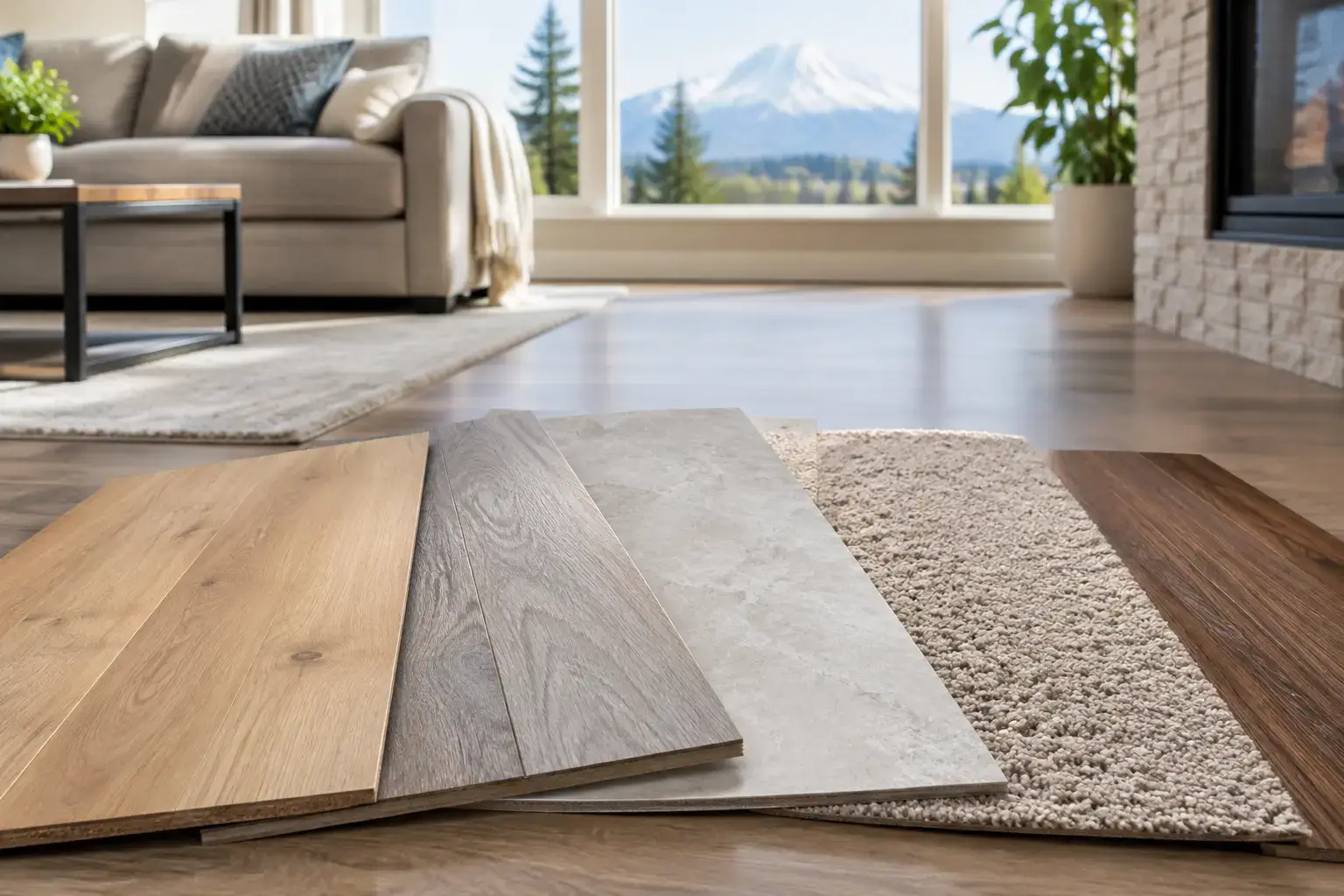
A good floor has to do more than look right on installation day. In Kitsap and Mason County, it needs to stand up to wet boots, rainy dogs, tracked-in grit, busy kitchens, rental turnovers, and the moisture conditions common in Pacific Northwest homes. This flooring options comparison focuses on the choices that hold up in real life, not just under showroom lighting.
The best material depends on the room, the condition of the subfloor, how the property is used, and how much maintenance you are prepared to handle. A durable floor in a family entry may be the wrong choice for a quiet upstairs bedroom. The goal is not to pick the most expensive product. It is to install flooring that fits the job and continues performing for years.
Start With How the Room Is Actually Used
Before comparing colors, plank widths, or price per square foot, consider what happens in the room every day. Is it a ground-level entry where water comes in with every storm? Is it a kitchen where spills are common? Is it a rental unit where easy cleaning and repair matter most? Or is it a bedroom where warmth and comfort matter more than water resistance?
Subfloor condition also matters. Older homes may have uneven areas, squeaks, previous water damage, or layers of old flooring that need to be removed before new material goes down. Installing a quality floor over an unprepared subfloor can lead to movement, gaps, cracked tile, or premature wear. Good flooring work starts underneath the finished surface.
For local homeowners, moisture should be part of every flooring decision. That does not mean every room needs tile. It does mean that product selection, underlayment, transitions, and installation methods need to account for the way a Washington home handles humidity, spills, and seasonal weather.
Flooring Options Comparison: The Main Choices
Luxury Vinyl Plank and Luxury Vinyl Tile
Luxury vinyl plank, often called LVP, is one of the most practical choices for busy homes and rental properties. It gives homeowners the look of wood or stone while offering strong resistance to everyday water exposure, scratches, and stains. It is especially well suited for kitchens, hallways, living areas, laundry rooms, and main-floor spaces where children, pets, or frequent foot traffic are part of the picture.
LVP is not indestructible. Heavy furniture can dent some products, and low-quality material may show wear at seams or edges over time. It can also feel less substantial than real wood underfoot. Still, for a homeowner who wants a durable, easy-care floor without the maintenance demands of hardwood, it is often one of the best all-around values.
Luxury vinyl tile offers similar benefits in a tile look. It can be a practical choice for bathrooms, mudrooms, and utility spaces where you want the appearance of stone without the cold feel, grout cleaning, or installation cost of ceramic tile.
Engineered Hardwood
Engineered hardwood brings real wood character to a home with more stability than traditional solid hardwood. It has a genuine hardwood surface over a layered core, which helps it handle normal changes in indoor humidity better than solid boards. For living rooms, dining rooms, bedrooms, and well-protected hallways, it creates a warm, long-lasting finish that can add real appeal to a home.
The trade-off is water. Engineered hardwood is more stable than solid hardwood, but it is not waterproof. Standing water, repeated wet mopping, and untreated leaks can damage it. The thickness of the wood veneer also varies by product, affecting whether it can be refinished later.
This is a strong choice when appearance and resale value are priorities, but it needs thoughtful placement. It is generally better away from exterior doors, bathrooms, and laundry areas unless the product and installation details are specifically designed for those conditions.
Solid Hardwood
Solid hardwood remains a classic option for homeowners who want authentic material, natural variation, and the ability to refinish the floor over its lifetime. Oak, maple, hickory, and other species can bring a level of character that printed flooring products cannot fully duplicate. In the right room, hardwood is an investment that can age well and be renewed instead of replaced.
It also requires more care than many modern alternatives. Wood expands and contracts with moisture changes, scratches more easily than vinyl or tile, and can be damaged by leaks. Solid hardwood is usually best for dry, climate-controlled living spaces and bedrooms rather than bathrooms or below-grade areas.
If your household includes large dogs, active kids, or heavy furniture movement, wood can still work, but choose a harder species, a forgiving finish, and a realistic maintenance plan. A few scratches may be part of the character. If that will bother you, LVP may be the better fit.
Tile
Porcelain and ceramic tile are among the toughest flooring choices for wet areas. Properly installed tile performs well in bathrooms, mudrooms, laundry rooms, entryways, and kitchens. Porcelain is particularly dense and water-resistant, making it a smart choice where moisture is an ongoing concern.
Tile also comes with a few practical considerations. It is hard underfoot, cold in winter without radiant heat, and less forgiving when something is dropped. Grout lines require upkeep, and cracked tile can point to movement or weakness in the subfloor below. Proper preparation is not optional here. A floor that flexes can cause tile and grout to fail.
For homeowners who want long-term durability in a bathroom or entry, tile is hard to beat. For a whole-house floor, comfort and installation cost may steer the decision toward vinyl or engineered wood instead.
Laminate Flooring
Modern laminate has improved significantly in appearance and durability. It can provide a convincing wood look at a budget-friendly price, and many products resist scratches well. It is often considered for bedrooms, living rooms, and rental properties where cost control matters.
The key question is water resistance. Some newer laminate products are made to handle spills better than older versions, but laminate is generally less forgiving than LVP when water reaches the seams or core. A small spill cleaned quickly may be no problem. A leaking dishwasher or repeated wet shoes at the door is another matter.
Laminate can be a sensible choice for dry areas when the product quality is good and the installation is done correctly. For a high-moisture room, vinyl or tile usually provides better peace of mind.
Carpet
Carpet still has a place, especially in bedrooms, upstairs spaces, and rooms where comfort and sound control matter. It is warmer underfoot than hard surfaces, softens noise between floors, and can make a bedroom feel more comfortable during cool Northwest mornings.
Its weakness is obvious: carpet holds dirt, allergens, pet hair, and moisture more readily than hard flooring. It is not the right choice for entryways, kitchens, bathrooms, or homes where spills and muddy traffic are constant. In a rental, carpet can also mean more frequent replacement between tenants.
If carpet is the right fit, pay attention to the pad as well as the carpet itself. A quality pad improves comfort, appearance, and service life. Stain-resistant products can help, but they do not replace regular cleaning.
Match the Material to the Space
A home does not need one flooring material everywhere. In fact, mixing materials often produces a better result. LVP can carry the main living areas and kitchen, tile can protect bathrooms and mudrooms, and carpet can make bedrooms more comfortable. Engineered hardwood may belong in a formal living room or dining area where its natural finish can take center stage.
For landlords and property managers, consistency can simplify future repairs and turnover work. Keeping an extra box of the installed flooring on hand is a practical move. If a tenant damages a section years later, matching the original product is far easier when replacement material is available.
Transitions deserve attention too. Different flooring heights need to meet cleanly and safely at doorways. A poor transition can become a tripping hazard, look unfinished, or create a weak point where water and debris collect.
Price Matters, but Installation Quality Matters More
Material cost is only one part of the project budget. Demolition, disposal, moisture barriers, underlayment, floor leveling, trim work, furniture moving, and subfloor repairs can all affect the final price. A low-cost product may stop being a bargain if it is installed over a floor that needs significant preparation.
This is where an in-person evaluation pays off. A contractor can identify soft spots, moisture concerns, damaged underlayment, and doorway clearance issues before work begins. That helps prevent change orders and protects the finished floor from problems that started below it.
Kitsap Maintenance helps homeowners, landlords, and property managers choose practical flooring solutions based on the room, the property, and the work the floor needs to do. The right recommendation should be clear about both the benefits and the limitations of each material.
When you are ready to make a choice, bring samples into the actual room and look at them in morning, afternoon, and evening light. Then choose the floor that fits how you live, not just what looks good in a small display sample.
Leave a Reply