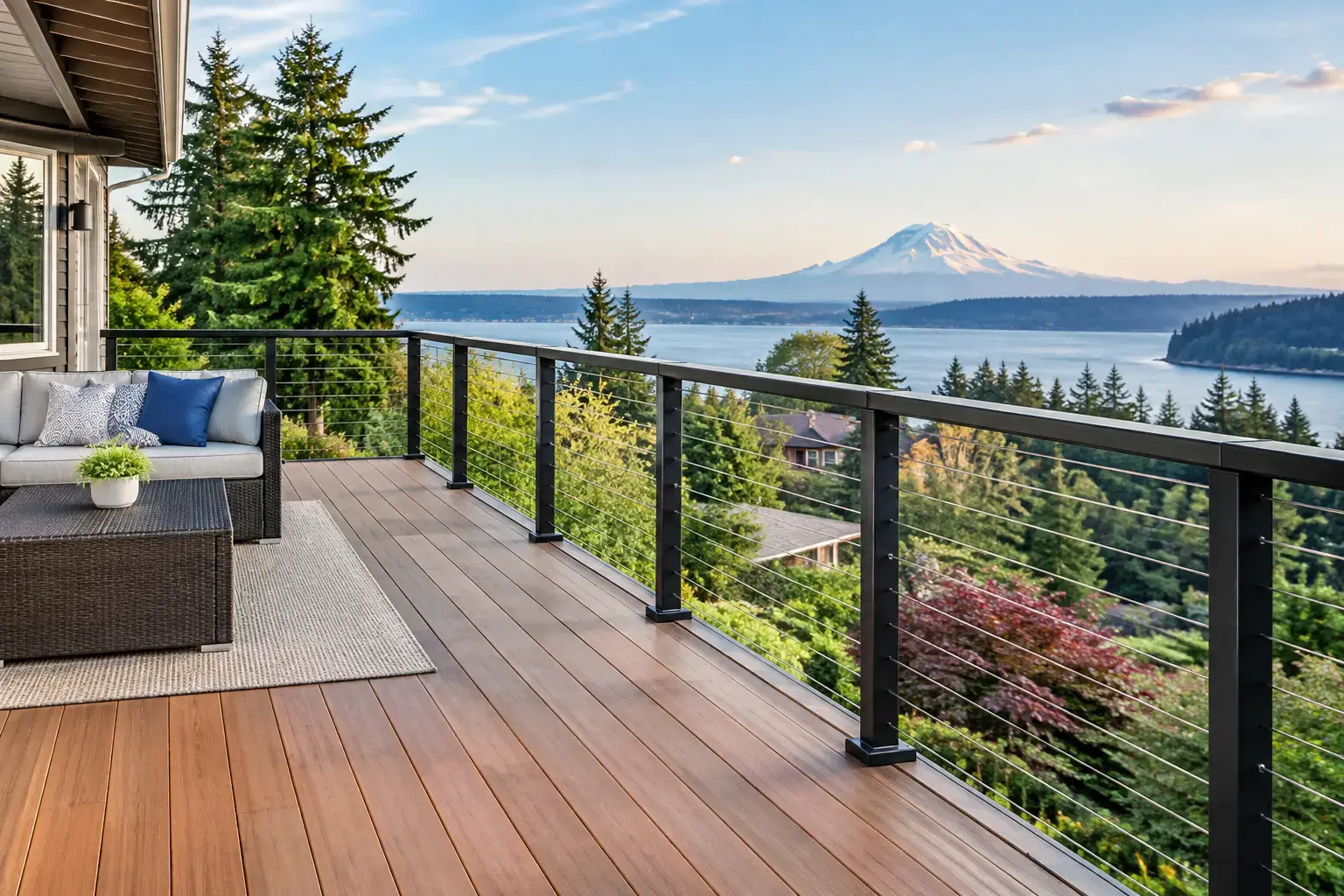
A railing can make a new deck look finished, but its real job is far more serious. It needs to protect the people using the space, meet local requirements, and stand up to years of Kitsap and Mason County rain, wind, salt air, and seasonal temperature changes. This deck railing review looks at the materials homeowners ask about most and the trade-offs that matter before construction begins.
The right choice is rarely about picking the most expensive option or copying a photo from a magazine. It comes down to how you use your deck, the view you want to preserve, how much maintenance you are willing to handle, and whether the railing fits the structure underneath it. A good railing should feel solid every time someone leans on it, without becoming a constant weekend chore.
A Deck Railing Review Starts With Safety
Before choosing a color, profile, or infill style, start with the basics: the deck framing and railing attachment points. A beautiful rail system cannot make up for a soft deck rim joist, loose posts, water-damaged stairs, or undersized hardware. This is especially true on older wood decks, where rot can hide behind fascia boards and at the base of posts.
Most elevated residential decks require a guardrail, and rail height, opening size, stair handrails, and post spacing are governed by building code. Requirements can vary based on the property, deck height, and local jurisdiction. Homeowners should not assume that an existing railing is compliant simply because it has been there for years. During a professional site visit, the deck itself should be reviewed along with the railing plan.
A properly installed railing has secure posts, correctly rated connectors, appropriate fasteners, and a layout that does not create unsafe gaps. For rental properties, that attention protects tenants and helps owners avoid putting off a safety repair that only gets more costly with time.
Wood Railings: Traditional Look, Ongoing Work
Wood railing remains a practical choice for homeowners who want a classic Northwest look and have a modest budget. Cedar can be attractive and naturally more resistant to decay than many common framing woods. Pressure-treated lumber is widely available and works well when built correctly.
The trade-off is maintenance. Rain soaks into neglected wood, and repeated wet-dry cycles can lead to checking, splintering, fading, and movement at connections. Paint or stain does not last forever, particularly on horizontal top rails that catch standing water and direct sun. Expect periodic cleaning, sealing, and repairs if you want wood to stay safe and presentable.
Wood can be a smart fit for covered decks, rustic homes, or projects where the railing needs to match existing trim. It is less appealing for homeowners who want to install it once and spend more weekends enjoying the deck than maintaining it.
Composite Railings: Clean Appearance With a Higher Upfront Cost
Composite railing is popular with homeowners who are already investing in Trex or similar composite decking. The colors and profiles are designed to coordinate, creating a finished, intentional appearance instead of a mix of unrelated materials. It also avoids many of the painting and staining demands of wood.
Composite systems do cost more upfront, and some styles use reinforced internal components or a mix of composite sleeves and metal hardware. That is not a weakness – it is how the system achieves the strength required for guardrails. The key is to use approved components and follow the manufacturer’s installation requirements rather than trying to adapt random materials on site.
In wet Washington conditions, composite railing is a strong long-term option for homeowners who value low upkeep. It still needs occasional washing to remove dirt, pollen, and mildew, especially on shaded decks. It is not maintenance-free, but it is usually far less demanding than painted wood.
Aluminum Railings: Durable and Easy to Live With
Aluminum railings are one of the most practical choices for exposed decks. They are lightweight, corrosion-resistant, and available in clean, modern profiles that work with wood or composite decking. Black aluminum with square balusters remains a common choice because it creates contrast without blocking the view as much as wider wood rails.
For homes near saltwater, quality matters. Not all coatings and fasteners perform equally in a marine environment, and mixed metals can create corrosion concerns when the wrong components are paired together. A contractor should select a system appropriate for the site and use compatible hardware throughout.
Aluminum is generally low-maintenance and does not need staining. It may cost more than basic wood, but it can be a better value over time for homeowners who do not want recurring paint and rot repairs. If the deck has a contemporary design or overlooks a wooded lot, aluminum often gives the best balance of price, durability, and appearance.
Cable Railings: Better Views, More Planning
Cable railing is chosen for one reason above all others: it keeps sightlines open. On waterfront, hillside, or backyard-view decks, thin stainless-steel cables can make a major difference. The system can feel almost invisible from inside the house while still providing the needed barrier.
That cleaner look comes with a few important considerations. Cable systems require strong end posts and proper tensioning. Cables may need adjustment over time, particularly after installation and through changing weather conditions. They also need to meet code requirements for spacing and deflection, which means this is not a place for shortcuts or improvised parts.
Cable can be an excellent investment on a deck built around a view. It may be less practical for a tight budget, for locations where children are likely to climb, or for homeowners who want the simplest possible installation. Stainless hardware also needs to be selected carefully for wet and coastal environments.
Glass Railings: Maximum View, Visible Maintenance
Glass railing provides the clearest possible view and adds a high-end finish to a deck. It is especially effective on homes facing water, mountains, or open landscape. When installed well, glass panels can reduce wind while keeping the space bright and open.
The honest downside is cleaning. Rain spots, salt spray, fingerprints, and pollen show readily on glass, particularly on decks near the water. Glass systems also tend to cost more because panels, mounting hardware, handling, and installation all require precision. A damaged panel is not a quick, inexpensive repair.
For the right property, glass is worth the investment. For a busy rental, a heavily wooded lot, or a deck that receives constant spray from weather, aluminum or cable may offer a more forgiving long-term experience.
Comparing Railing Cost Beyond the Estimate
A low initial price does not always equal a lower-cost railing. Wood can be affordable on day one but may require years of staining, painting, board replacement, and fastener repairs. Composite and aluminum often carry a higher initial investment while reducing routine upkeep. Cable and glass usually sit at the premium end because their materials and installation demands are greater.
It also helps to consider how the railing works with the deck’s expected lifespan. Installing a premium rail system on failing framing does not make sense. On the other hand, replacing an old deck is the best time to choose a railing that matches the look and maintenance level you want for the next several decades.
Ask for a clear scope of work that identifies the railing system, post locations, fasteners, stair details, and whether repairs to the deck structure are included. Vague estimates create room for surprises once old materials come off.
Questions Worth Asking Before You Choose
A dependable contractor should be able to explain why a particular railing suits your home, not just show you a catalog. Ask whether the existing deck can support the new system, how posts will be attached, what maintenance the material requires, and whether the product is appropriate for a coastal or heavily exposed location.
Also ask how the railing will meet applicable code requirements and whether a permit is needed for the work. If a project includes new stairs, a deck rebuild, or structural repairs, those details should be addressed early instead of after materials are ordered.
Kitsap Maintenance helps homeowners evaluate the full deck condition before recommending a railing system, so the finished work is built on a sound foundation rather than a temporary fix.
The best railing is the one you can trust when family, guests, tenants, and pets are using the deck. Choose a system that fits the property, budget for proper installation, and do not ignore loose posts or deteriorating wood while waiting for a future upgrade.
Leave a Reply