Quick Summary
The composite vs wood deck choice comes down to paying more upfront for low maintenance or paying less now and committing to regular sealing and staining. Composite resists rot and insects and needs no staining or sealing, while wood offers a natural look and lower initial price.
- Composite is typically expensive to build but can last 25 to 50 years.
- Composite does not require staining or sealing, unlike wood.
- Wood has a lower upfront cost and a warm, natural appearance.
- Wood needs regular sealing and staining, and can crack, warp, or rot if neglected.
- Compare line-item bids over a 15 to 20 year horizon to judge total ownership cost.
Table of Contents
- Composite vs Wood Deck Pros and Cons for Kitsap Homeowners
- Composite vs Wood Deck: The Core Trade-Off
- Composite Decking Pros and Cons
- Wood Decking Pros and Cons
- Composite vs Wood Decking Cost: Upfront and Long-Term
- Composite Decking Maintenance Compared With Wood
- Composite Decking Lifespan and Durability
- Choosing Your Deck Material With Corbett Construction
- Frequently Asked Questions
Composite vs Wood Deck Pros and Cons for Kitsap Homeowners
Last Updated: November 1, 2026
Composite vs Wood Deck: The Core Trade-Off
Choosing between composite and wood decking comes down to one trade-off: pay more up front for less upkeep, or pay less now and commit to regular maintenance. At Corbett Construction, we help homeowners weigh both sides before they commit to a material. A 2024 homeowner guide from Star Lumber’s Wood vs Composite Decking Homeowner’s Guide describes composite decking as having a lifespan of 25 to 50 years, while characterizing it as expensive to build.
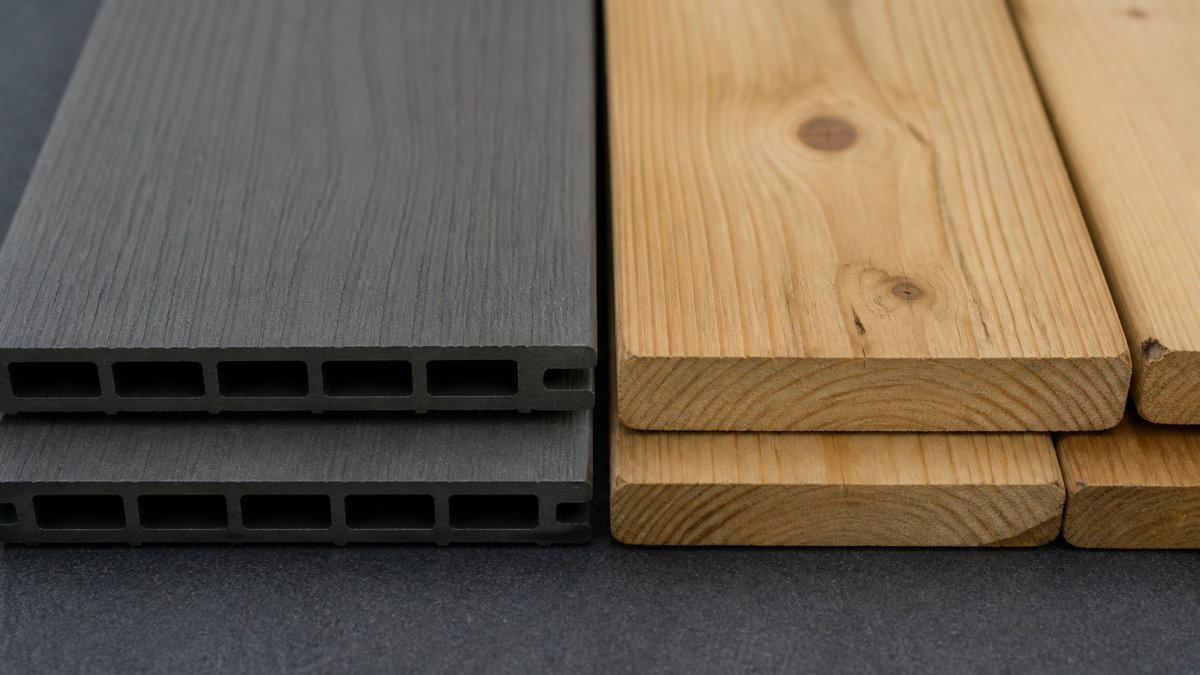
Composite is a manufactured product, typically made from wood fibers and plastic, designed to resist rot and insect damage. Wood is natural, usually pressure-treated pine, cedar, or a hardwood like ipe, and it needs regular sealing or staining to hold up.
Wood wins on appearance and initial price. Composite wins on durability and low maintenance. Neither is the right answer for every deck, so the right choice depends on how you plan to use the space and how much time you want to spend on upkeep.
Composite Decking Pros and Cons
Composite’s main advantage is how little it asks of you after installation. Lowe’s guide comparing composite and wood decking notes that composite resists rot, insects, and moisture and does not require staining or sealing. For homeowners who do not want to spend weekends on upkeep, that matters.
The drawbacks are real. Composite typically costs more to build than wood, and some buyers find its appearance less natural.
Best for: Homeowners who plan to stay in the house long enough to recover the higher upfront cost and want a deck that stays looking good without regular sealing.
Skip if: Natural wood appearance is a top priority or your budget is tight at the start of the project.
Wood Decking Pros and Cons
Wood has a lower upfront cost and a warm, natural look that many homeowners prefer. Wood remains a practical choice for many projects because of its natural beauty and lower upfront cost.
The tradeoff is upkeep. Wood needs regular sealing and staining to resist moisture, and it can crack, warp, or rot if neglected. Many owners who choose wood underestimate how much maintenance they will need to commit to over the years.
Best for: Homeowners who value a natural appearance and want to keep initial costs down, and who are comfortable doing regular maintenance.
Skip if: You want a deck that needs minimal attention after it is built.
Composite vs Wood Decking Cost: Upfront and Long-Term
Upfront cost is where most homeowners start, and composite usually costs more to install than pressure-treated wood. The gap comes from the material itself and, in some cases, from specialized installation hardware and hidden fasteners. Comparing only the bid price can be misleading, because the two materials carry different ownership costs after installation.

A more useful approach is a lifecycle cost comparison over a defined period. Pick a horizon, 15 or 20 years is typical for this decision, and total five line items: material, installation, routine cleaning, sealing or staining, and repairs or board replacement. The point is not a single national number, because deck size, board choice, and local labor rates move every line. The point is to see which material wins on total ownership rather than sticker price.
Here is a framework you can use to compare your own project numbers:
- Material and installation. Composite carries a higher material cost per square foot than pressure-treated pine, and capped composite lines sit above uncapped lines. Cedar and tropical hardwoods such as ipe land at different points again, so “wood” is not one price. Get line-item bids rather than a single lump sum so you can compare like with like.
- Routine cleaning. Both materials need periodic washing. This line is small for either material and rarely decides the comparison.
- Sealing and staining. This is where wood’s lower purchase price gets consumed. Pressure-treated pine typically needs sealing or staining periodically depending on exposure, and each cycle carries product cost plus either your own labor or a contractor’s charge. Cedar and many hardwoods can stretch the interval but still need periodic finish. Composite does not require staining or sealing, which is the single largest recurring line in wood’s favor to composite.
- Repairs and replacement. Wood can rot, cup, and splinter, and individual boards can be replaced. Composite resists rot and insects but is not indestructible, impact damage, staining, and fading are the common failure modes, and board replacement depends on whether the profile is still in production. Budget a modest repair allowance for either material rather than assuming zero.
- End-of-life. Wood is generally treated as construction debris; composite disposal depends on the local waste stream and the product’s recycled content. This line is usually small but worth asking about before you buy.
Run the framework both ways. If wood’s lower upfront bid plus its staining cycles still comes in below composite’s higher bid over your horizon, wood wins on total cost. If the staining cycles and repair allowance close the gap, composite’s lower recurring burden becomes the deciding factor. The crossover point depends on how long you stay in the home and how much you value your own maintenance time, a factor no bid sheet captures.
Ask each bidder for a line-item breakdown by material, labor, fasteners, and any required finish. A single lump-sum quote hides the very differences this comparison depends on.
For current pricing on either material, contact Corbett Construction for a quote based on your deck’s dimensions and design.
Composite Decking Maintenance Compared With Wood
Composite still needs basic care. Simple cleaning and inspection steps can help protect your composite deck for years. Comparing Trex vs AZEK decking shows how price, heat, traction, durability, and upkeep affect the right deck choice for your home. Sweep debris, wash the surface periodically, and inspect fasteners and railings each season. This is far less work than wood requires.
Wood typically needs cleaning, sanding when weathered, and periodic sealing or staining, depending on exposure. Learn how to fix wood rot the right way, from spotting hidden damage to repairing or replacing rotted boards. Skipping this work is how wood decks begin to rot and warp.
Corbett Construction can walk you through a maintenance plan for either material, so you know what to expect before construction begins.
The table below sums up the maintenance differences between the two materials.
| Material | Routine care | Staining or sealing |
|---|---|---|
| Composite | Sweep, wash periodically, inspect each season | Not required |
| Wood | Clean, sand when weathered, periodic sealing | Periodic, depending on exposure |
Composite Decking Lifespan and Durability
Composite’s durability is its strongest selling point, but “composite” covers a wide range of products, and the broad claims obscure meaningful differences. Composite decking lifespans are often cited as considerably longer than those of untreated or lightly maintained wood. That range can span entry-level uncapped boards and premium capped lines, and the two do not age the same way.
The product distinctions that matter:
- Uncapped composite. Wood fiber and plastic throughout, with no protective shell. It resists rot and insects, but the surface is more vulnerable to moisture absorption, staining, and fading over time. It is typically the lower-cost composite option.
- Capped composite. A protective polymer cap over the core, engineered to resist fading, staining, and moisture uptake. Capped lines generally carry the stronger fade and stain warranties, and the cap is the main reason the upper end of the lifespan range is achievable.
- Wood species, for comparison. Pressure-treated pine is the budget baseline and depends heavily on maintained sealing. Cedar and redwood offer natural rot resistance but still weather and need finish. Tropical hardwoods such as ipe are dense and durable but carry their own cost and finish requirements. “Wood” is not one durability story any more than “composite” is.
Failure modes differ by material, and knowing them tells you what to inspect. Composite’s common issues are surface fading, staining from debris or grill grease, scratching, and impact damage; structural rot is not the concern it is with wood. Wood’s common issues are moisture-driven rot, cupping and warping, splintering, and insect damage, all accelerated by neglected sealing. A wet, shaded deck dries more slowly and will stress either material, so site conditions matter as much as product choice.
Warranties are where the marketing and the reality diverge, so read the terms rather than the headline duration. Compare:
- Duration and structure. Many composite warranties are tiered, with a longer structural coverage and a shorter fade-and-stain coverage.
- Exclusions. Fading beyond a stated threshold, staining from organic debris or chemicals, scratches, and improper installation are commonly excluded or limited.
- Installation requirements. Warranties typically require installation per the manufacturer’s instructions, including specific fasteners and spacing. A deck built off-spec can void coverage regardless of the product’s quality.
- What is not guaranteed. A warranty is not a promise the deck will look new for its full term; it defines what the manufacturer will remedy and under what conditions.
A long warranty term is not the same as strong coverage. Ask for the actual warranty document, not the summary, and check the fade-and-stain section and the installation requirements before you commit.
Actual lifespan depends on product quality, installation, and climate. Check manufacturer warranties carefully, as coverage terms and conditions vary by brand.
Choosing Your Deck Material With Corbett Construction
The right material depends on your budget, your tolerance for maintenance, and how you use the space. If you want a deck that stays low maintenance for decades, composite is worth the higher upfront cost. If you prefer a natural wood look and plan to keep up with sealing, wood remains a sound choice.
Corbett Construction builds custom wood and composite decks in Kitsap and Mason counties. Request a deck estimate from Corbett Construction to compare materials for your specific project, or learn how to choose composite decking for your home before you decide. Let’s talk about which material fits your space.
Frequently Asked Questions
What are the pros and cons of composite decking compared with wood?
Composite decking resists rot, insects and moisture and does not require staining or sealing, . Its main drawbacks are a higher upfront cost and, a look some buyers find less appealing than natural wood. Wood offers natural beauty and a lower upfront price, but it needs regular sealing and upkeep to resist moisture and weathering. The right choice depends on whether you value appearance and initial budget more than low upkeep.
Which costs more: a wood deck or a composite deck?
Composite decking usually costs more upfront. Composite installation generally costs more than pressure-treated wood. Pricing depends on project size, design and materials. Contact Corbett Construction for a current quote on your project.
Does composite decking last longer than wood?
Composite decking is often described as lasting considerably longer than wood. Wood decks generally last less when they are not maintained regularly. Composite’s longer expected life and lower upkeep are the main reasons many homeowners choose it, though it costs more at the start. Lifespan varies with product quality, installation and climate.
Which type of decking requires less maintenance?
Composite decking requires far less maintenance. Composite generally does not need staining or sealing, while wood needs regular sealing and upkeep. Composite still benefits from routine cleaning, and wood can be a good choice if you are willing to maintain it on a regular schedule.

Leave a Reply